Service of notice and contractual debt acknowledgment preserved insolvency admission against a corporate guarantor despite limitation and natural just...
Original works exemption excludes standalone boulder transportation, leaving subcontracted railway-project transport services subject to service tax l...
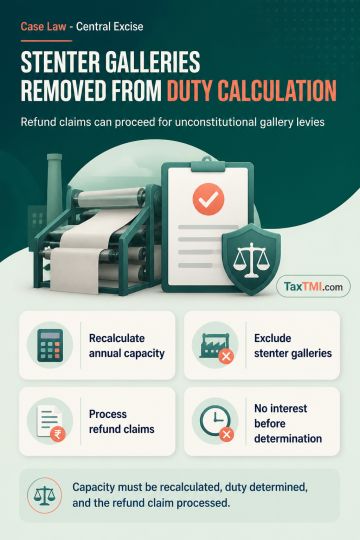
Annual production capacity determinations excluding stenter galleries support refunds for unconstitutional excise levies without an unjust-enrichment ...
Vicarious liability for cheque dishonour requires specific allegations of responsibility and cheque signatory; generic director allegations cannot sus...
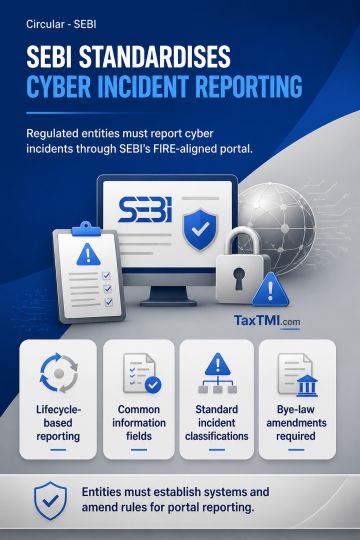
IT Resilience Index requires market infrastructure institutions to automate resilience scoring, early warnings, and continuous service-delivery monito...
The HC dismissed the writ petition challenging the rejection of a request for disclosure of third-party information under Section 138(1)(b) of the IT Act. The petitioner sought information regarding tax evasion proceedings against his father-in-law to use as evidence in a criminal case under Section 498-A IPC initiated by his ex-wife. The court held that such information does not qualify as being in the public interest and that the petitioner had already been furnished relevant information under the RTI Act. The impugned order was found to be reasoned and valid, emphasizing that disclosure of tax evasion details against a third party for use in criminal proceedings is impermissible. The petitioner was advised to rely on the information already provided under the RTI Act, and the petition was dismissed for lack of merit.
The HC dismissed the writ petition challenging the rejection of a request for disclosure of third-party information under Section 138(1)(b) of the IT Act. The petitioner sought information regarding tax evasion proceedings against his father-in-law to use as evidence in a criminal case under Section 498-A IPC initiated by his ex-wife. The court held that such information does not qualify as being in the public interest and that the petitioner had already been furnished relevant information under the RTI Act. The impugned order was found to be reasoned and valid, emphasizing that disclosure of tax evasion details against a third party for use in criminal proceedings is impermissible. The petitioner was advised to rely on the information already provided under the RTI Act, and the petition was dismissed for lack of merit.
Note: It is a system-generated summary and is for quick reference only.
 TaxTMI
  TaxTMI
 of 4828


















 Join Channel