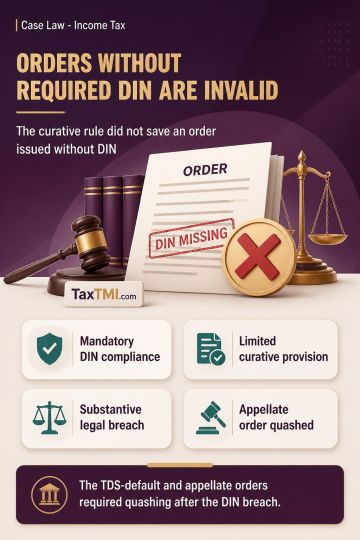
Document Identification Number compliance renders TDS-default orders invalid where mandatory DIN requirements are breached and curative provision does...
The ITAT allowed the assessee's appeal, holding that the bad debt claim under section 36(1)(vii) is allowable as the debt was effectively written off in the books despite being recorded as a provision for doubtful debts. The tribunal emphasized that the statutory requirement is satisfied if the write-off is real and identifiable, irrespective of the nomenclature used. Reliance was placed on ledger entries demonstrating the debit to the profit and loss account and credit to the debtor's account, confirming the write-off. The absence of a formal court order or allegations of fabrication were rejected due to evidence of partial payments received, including through court channels. The decision aligns with CBDT Circular No. 12/2016, which permits bad debt claims even if recovery efforts continue. Consequently, the addition disallowing the bad debt was set aside.
The ITAT allowed the assessee's appeal, holding that the bad debt claim under section 36(1)(vii) is allowable as the debt was effectively written off in the books despite being recorded as a provision for doubtful debts. The tribunal emphasized that the statutory requirement is satisfied if the write-off is real and identifiable, irrespective of the nomenclature used. Reliance was placed on ledger entries demonstrating the debit to the profit and loss account and credit to the debtor's account, confirming the write-off. The absence of a formal court order or allegations of fabrication were rejected due to evidence of partial payments received, including through court channels. The decision aligns with CBDT Circular No. 12/2016, which permits bad debt claims even if recovery efforts continue. Consequently, the addition disallowing the bad debt was set aside.
Note: It is a system-generated summary and is for quick reference only.
 TaxTMI
  TaxTMI
 of 4918