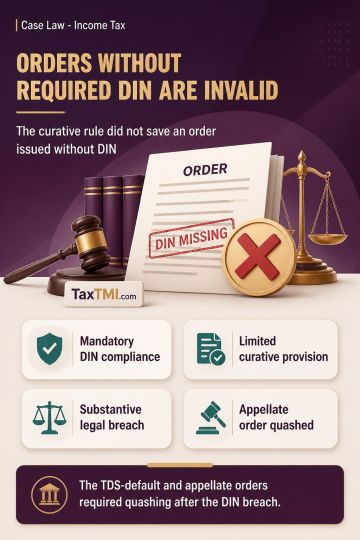
Document Identification Number compliance renders TDS-default orders invalid where mandatory DIN requirements are breached and curative provision does...
The CESTAT held that the adjudicating authority erred in applying Section 18(5) of the Customs Act, 1962, regarding recovery of refund of excess customs duty paid during provisional assessment. The tribunal clarified that such provisional duty payments are deposits, not final duty, and the doctrine of unjust enrichment does not apply to refunds of excess duty on unutilized stores. The appellant demonstrated that the refund claim was properly recorded in accounting books and the duty was not passed on to buyers. Consequently, the recovery order for Rs. 11,05,908/- plus interest was set aside. The appeal was allowed, affirming that no recovery is warranted under the circumstances.
The CESTAT held that the adjudicating authority erred in applying Section 18(5) of the Customs Act, 1962, regarding recovery of refund of excess customs duty paid during provisional assessment. The tribunal clarified that such provisional duty payments are deposits, not final duty, and the doctrine of unjust enrichment does not apply to refunds of excess duty on unutilized stores. The appellant demonstrated that the refund claim was properly recorded in accounting books and the duty was not passed on to buyers. Consequently, the recovery order for Rs. 11,05,908/- plus interest was set aside. The appeal was allowed, affirming that no recovery is warranted under the circumstances.
Note: It is a system-generated summary and is for quick reference only.
 TaxTMI
  TaxTMI
 of 4918