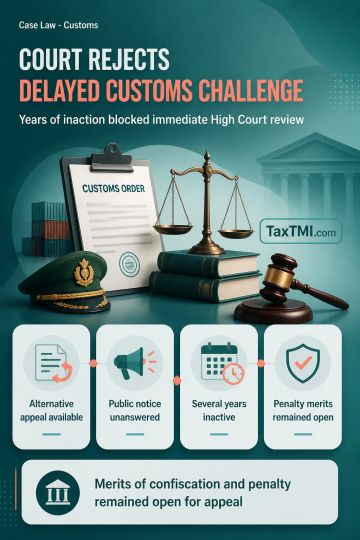
Alternative statutory remedy and unexplained delay barred writ review of customs confiscation adjudication, leaving merits for appellate consideration...
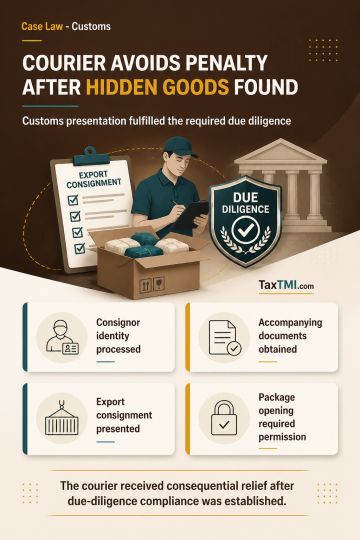
Authorised courier due diligence protects against penalties where declared exports conceal prohibited goods despite proper documentation and customs p...
Customs-controlled container movement now extends to DP World facilities, subject to segregation, inspections, reconciliation, and EXIM cargo priority...
The HC held that the presumption under Section 139 of the NI Act extends to legally enforceable debts, including those arising from cheque transactions. However, this presumption can be rebutted by the accused through a probable defense on the preponderance of probabilities, creating doubt about the existence of such debt. Cash transactions exceeding Rs. 20,000 in violation of the Act 1961 do not constitute legally enforceable debts unless validly explained under Section 273B of the Act 1961. In the instant case, the complainant failed to provide any valid explanation for the cash payment and did not prove a legally enforceable debt. The accused successfully rebutted the presumption under Section 139 NI Act. Consequently, the convictions and sentences imposed by the lower courts were set aside, and the accused was acquitted. The criminal revision petition was allowed.
The HC held that the presumption under Section 139 of the NI Act extends to legally enforceable debts, including those arising from cheque transactions. However, this presumption can be rebutted by the accused through a probable defense on the preponderance of probabilities, creating doubt about the existence of such debt. Cash transactions exceeding Rs. 20,000 in violation of the Act 1961 do not constitute legally enforceable debts unless validly explained under Section 273B of the Act 1961. In the instant case, the complainant failed to provide any valid explanation for the cash payment and did not prove a legally enforceable debt. The accused successfully rebutted the presumption under Section 139 NI Act. Consequently, the convictions and sentences imposed by the lower courts were set aside, and the accused was acquitted. The criminal revision petition was allowed.
Note: It is a system-generated summary and is for quick reference only.
 TaxTMI
  TaxTMI
 of 4827











 Join Channel


