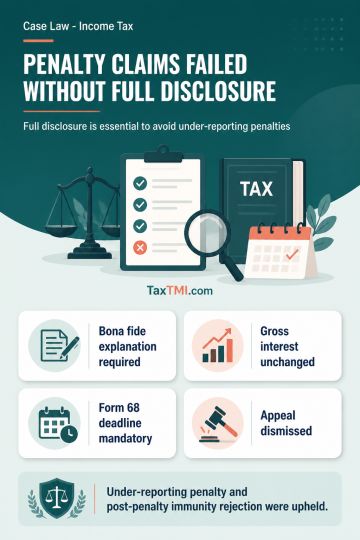
Bona fide disclosure requirements govern under-reporting penalties, and post-penalty immunity applications cannot secure available statutory protectio...
Certificate-of-origin verification procedure governs preferential customs benefits; denial without retroactive verification was set aside with consequ...
Disciplinary Committee jurisdiction and mandatory investigation requirements invalidated cancellation of an insolvency professional's registration and...
Retention of seized property survives where recorded reasons support proceeds of crime, while stayed investigation periods are excluded from limitatio...
The HC declined to exercise extraordinary jurisdiction under Articles 226 and 227 in a petition challenging the blocking of input tax credit under Rule 86A of the CGST Rules, 2017, relating to alleged non-existent suppliers. The Court emphasized that Rule 36 requires documentary evidence for claiming input tax credit, and fact-finding on the genuineness of invoices and related records falls within the competence of the adjudicating authority. It held that Rule 86A mandates a reasoned, objective determination based on material evidence before disallowing credit, not mere suspicion. Given the factual nature of the dispute, the HC remanded the matter to the competent authority to consider the petitioner's explanation with an opportunity of hearing within four weeks. The writ petition was disposed of accordingly, leaving factual adjudication and verification to the statutory authorities.
The HC declined to exercise extraordinary jurisdiction under Articles 226 and 227 in a petition challenging the blocking of input tax credit under Rule 86A of the CGST Rules, 2017, relating to alleged non-existent suppliers. The Court emphasized that Rule 36 requires documentary evidence for claiming input tax credit, and fact-finding on the genuineness of invoices and related records falls within the competence of the adjudicating authority. It held that Rule 86A mandates a reasoned, objective determination based on material evidence before disallowing credit, not mere suspicion. Given the factual nature of the dispute, the HC remanded the matter to the competent authority to consider the petitioner's explanation with an opportunity of hearing within four weeks. The writ petition was disposed of accordingly, leaving factual adjudication and verification to the statutory authorities.
Note: It is a system-generated summary and is for quick reference only.
 TaxTMI
 of 4807

















 Join Channel


 TaxTMI

