Captive power transfer pricing and non-resident export commission rules support deletion of adjustments and withholding disallowance in discussed proc...
Cooperative society deposits, member-interest TDS exemption and credit-facility deduction claims require verification through records and supporting e...
Customs jurisdiction over EPCG condition breaches survives export-obligation discharge certificates, requiring alleged fraud and misdeclaration to be ...
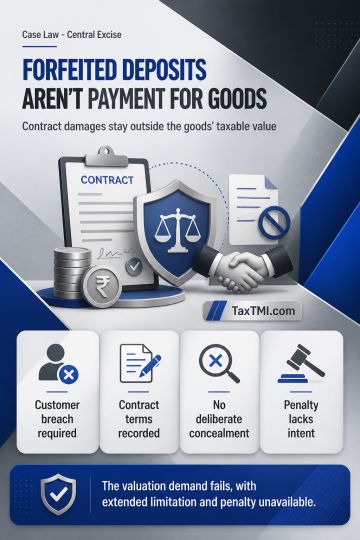
Contractual tolerance requires consideration; breach recoveries, qualifying public infrastructure services and road works escape service tax liability...
The HC declined to exercise extraordinary jurisdiction under Articles 226 and 227 in a petition challenging the blocking of input tax credit under Rule 86A of the CGST Rules, 2017, relating to alleged non-existent suppliers. The Court emphasized that Rule 36 requires documentary evidence for claiming input tax credit, and fact-finding on the genuineness of invoices and related records falls within the competence of the adjudicating authority. It held that Rule 86A mandates a reasoned, objective determination based on material evidence before disallowing credit, not mere suspicion. Given the factual nature of the dispute, the HC remanded the matter to the competent authority to consider the petitioner's explanation with an opportunity of hearing within four weeks. The writ petition was disposed of accordingly, leaving factual adjudication and verification to the statutory authorities.
The HC declined to exercise extraordinary jurisdiction under Articles 226 and 227 in a petition challenging the blocking of input tax credit under Rule 86A of the CGST Rules, 2017, relating to alleged non-existent suppliers. The Court emphasized that Rule 36 requires documentary evidence for claiming input tax credit, and fact-finding on the genuineness of invoices and related records falls within the competence of the adjudicating authority. It held that Rule 86A mandates a reasoned, objective determination based on material evidence before disallowing credit, not mere suspicion. Given the factual nature of the dispute, the HC remanded the matter to the competent authority to consider the petitioner's explanation with an opportunity of hearing within four weeks. The writ petition was disposed of accordingly, leaving factual adjudication and verification to the statutory authorities.
Note: It is a system-generated summary and is for quick reference only.
 TaxTMI
 of 4805

















 Join Channel


 TaxTMI
