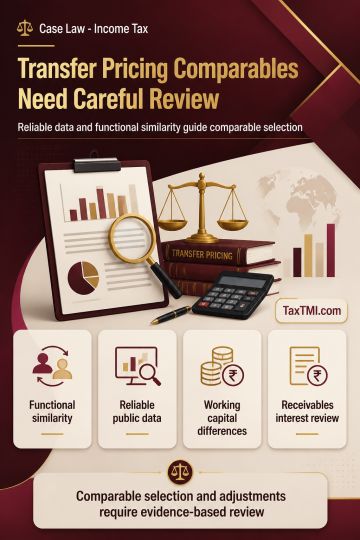
Transfer pricing comparability requires functional alignment, reliable financial data, and careful review of working capital and receivables adjustmen...
Transfer pricing rules require benchmarking corporate guarantees and associated-enterprise advances, while invalid domestic-transaction adjustments ca...
Prospective sugar export prohibition required registered letters of credit; private contracts and export quotas created no enforceable continuation ri...
Retroactive interim-moratorium exclusion permits protective asset disclosure and preservation measures against personal guarantors pending arbitration...
The HC declined to exercise extraordinary jurisdiction under Articles 226 and 227 in a petition challenging the blocking of input tax credit under Rule 86A of the CGST Rules, 2017, relating to alleged non-existent suppliers. The Court emphasized that Rule 36 requires documentary evidence for claiming input tax credit, and fact-finding on the genuineness of invoices and related records falls within the competence of the adjudicating authority. It held that Rule 86A mandates a reasoned, objective determination based on material evidence before disallowing credit, not mere suspicion. Given the factual nature of the dispute, the HC remanded the matter to the competent authority to consider the petitioner's explanation with an opportunity of hearing within four weeks. The writ petition was disposed of accordingly, leaving factual adjudication and verification to the statutory authorities.
The HC declined to exercise extraordinary jurisdiction under Articles 226 and 227 in a petition challenging the blocking of input tax credit under Rule 86A of the CGST Rules, 2017, relating to alleged non-existent suppliers. The Court emphasized that Rule 36 requires documentary evidence for claiming input tax credit, and fact-finding on the genuineness of invoices and related records falls within the competence of the adjudicating authority. It held that Rule 86A mandates a reasoned, objective determination based on material evidence before disallowing credit, not mere suspicion. Given the factual nature of the dispute, the HC remanded the matter to the competent authority to consider the petitioner's explanation with an opportunity of hearing within four weeks. The writ petition was disposed of accordingly, leaving factual adjudication and verification to the statutory authorities.
Note: It is a system-generated summary and is for quick reference only.
 TaxTMI
 of 4805
















 Join Channel


 TaxTMI