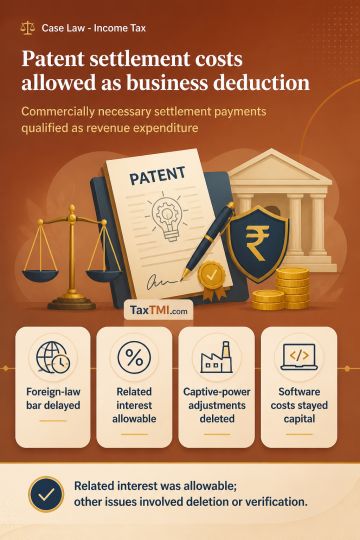
Patent-settlement expenditure treated as commercially expedient revenue outlay, with foreign-law restrictions inapplicable before the prospective amen...
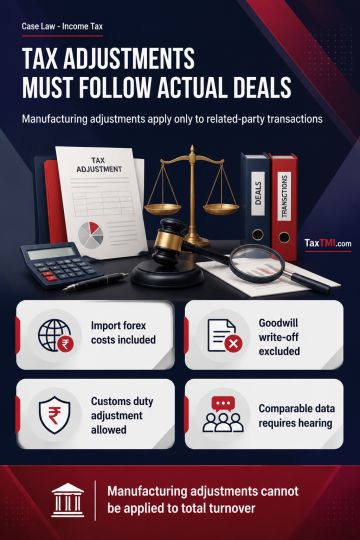
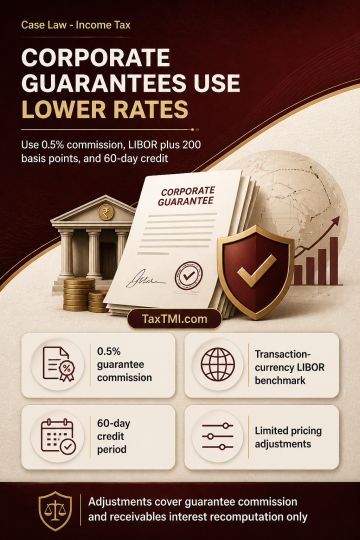
International transaction benchmarking restricts transfer pricing adjustments to associated-enterprise dealings, while functional comparability govern...
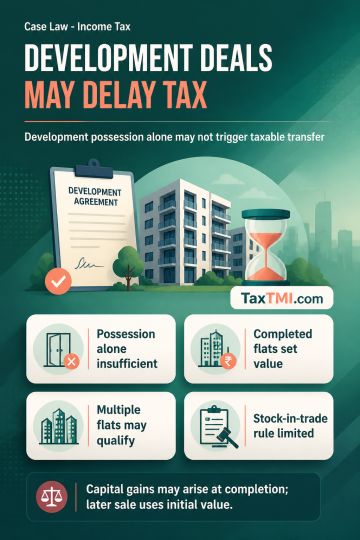
Joint development agreements defer taxable transfer where possession lacks part performance, while completed flats determine consideration and exempti...
Passenger baggage re-export requires true declaration and cannot be granted indirectly through discretionary redemption of undeclared prohibited goods...
The HC set aside the penalty imposed under section 129(3) of the GST Act for non-filing of Part-B of the e-way bill, finding no intent to evade tax. The petitioner demonstrated that the omission was due to a technical glitch, a fact undisputed in the record. The Court relied on precedents affirming that mere non-filing of the e-way bill does not attract penalty absent a tax evasion intent. As no authority below recorded any finding of willful tax evasion, the penalty was unwarranted. Consequently, the petition was allowed, and the impugned order imposing the penalty was quashed.
The HC set aside the penalty imposed under section 129(3) of the GST Act for non-filing of Part-B of the e-way bill, finding no intent to evade tax. The petitioner demonstrated that the omission was due to a technical glitch, a fact undisputed in the record. The Court relied on precedents affirming that mere non-filing of the e-way bill does not attract penalty absent a tax evasion intent. As no authority below recorded any finding of willful tax evasion, the penalty was unwarranted. Consequently, the petition was allowed, and the impugned order imposing the penalty was quashed.
Note: It is a system-generated summary and is for quick reference only.
 TaxTMI
 of 4801










 Join Channel


 TaxTMI