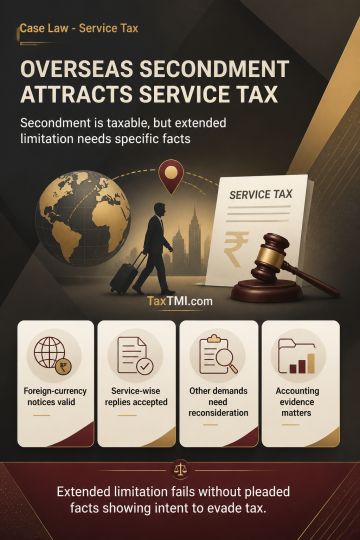
Extended limitation fails without specific suppression allegations, while overseas employee secondment remains taxable as manpower supply within norma...
Time-share accommodation classification excludes Club or Association Service where purchasers receive contractual occupancy rights without genuine mem...
CENVAT credit for trading requires reversal, while taxable-service rental credit remains proportionately available and limitation issues await resolut...
Vicarious liability for dishonoured company cheques may extend to non-signatory directors where complaints contain foundational responsibility avermen...
The HC set aside the penalty imposed under section 129(3) of the GST Act for non-filing of Part-B of the e-way bill, finding no intent to evade tax. The petitioner demonstrated that the omission was due to a technical glitch, a fact undisputed in the record. The Court relied on precedents affirming that mere non-filing of the e-way bill does not attract penalty absent a tax evasion intent. As no authority below recorded any finding of willful tax evasion, the penalty was unwarranted. Consequently, the petition was allowed, and the impugned order imposing the penalty was quashed.
The HC set aside the penalty imposed under section 129(3) of the GST Act for non-filing of Part-B of the e-way bill, finding no intent to evade tax. The petitioner demonstrated that the omission was due to a technical glitch, a fact undisputed in the record. The Court relied on precedents affirming that mere non-filing of the e-way bill does not attract penalty absent a tax evasion intent. As no authority below recorded any finding of willful tax evasion, the penalty was unwarranted. Consequently, the petition was allowed, and the impugned order imposing the penalty was quashed.
Note: It is a system-generated summary and is for quick reference only.
 TaxTMI
 of 4800









 Join Channel


 TaxTMI
