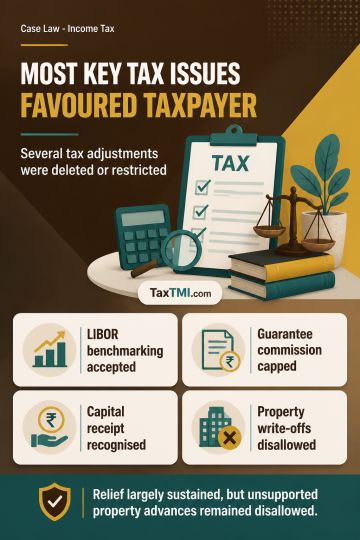
Transfer-pricing benchmarking and capital-receipt principles sustained taxpayer relief, while unsupported property-advance write-offs remained disallo...
Pre-existing operational debt disputes require genuine evidence, while undirected running-account payments may be appropriated on a first-in-first-out...
Agency in CNG distribution makes outlet operators commission agents, rendering taxable Business Auxiliary Service rather than purchasing goods for res...
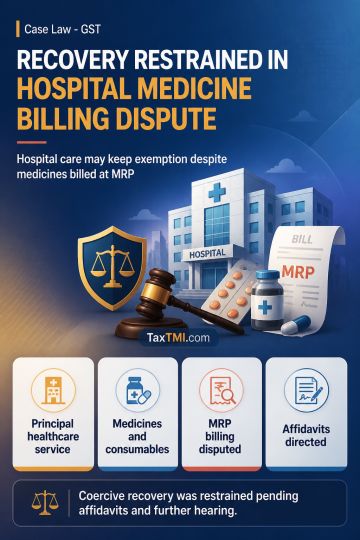
Composite inpatient healthcare supply may retain exemption despite MRP medicine billing, while separate taxable sale characterisation remains disputed...
Page of 4803
Press 'Enter' after typing page number.
1001 to 1020 of 96046 Results
❮
❯
❯❯
0 / 200
Expand Note
Add to Folder
No Folders have been created
+
Are you sure you want to delete "My most important" ?
The ITAT allowed the appeal of a public charitable trust, holding that the provisions of section 167A and the application of the maximum marginal rate (MMR) under section 167B are not applicable. The tribunal found that the trust's constitution and functions do not permit allocation of income shares among members, negating the relevance of individual shares being determinate or indeterminate. Consequently, the income of the trust must be taxed at normal rates applicable to an AOP or Body of Individuals, without surcharge under section 167B. The decision relied on consistent facts from subsequent assessment years and relevant CBDT circulars, affirming that the trust's income is not divisible among beneficiaries as in private trusts. The tribunal rejected the lower authorities' application of MMR and surcharge, emphasizing that the trust's public charitable nature excludes it from such provisions. The appeal was allowed accordingly.
The ITAT allowed the appeal of a public charitable trust, holding that the provisions of section 167A and the application of the maximum marginal rate (MMR) under section 167B are not applicable. The tribunal found that the trust's constitution and functions do not permit allocation of income shares among members, negating the relevance of individual shares being determinate or indeterminate. Consequently, the income of the trust must be taxed at normal rates applicable to an AOP or Body of Individuals, without surcharge under section 167B. The decision relied on consistent facts from subsequent assessment years and relevant CBDT circulars, affirming that the trust's income is not divisible among beneficiaries as in private trusts. The tribunal rejected the lower authorities' application of MMR and surcharge, emphasizing that the trust's public charitable nature excludes it from such provisions. The appeal was allowed accordingly.
Note: It is a system-generated summary and is for quick reference only.
 TaxTMI
 of 4803













 Join Channel


 TaxTMI