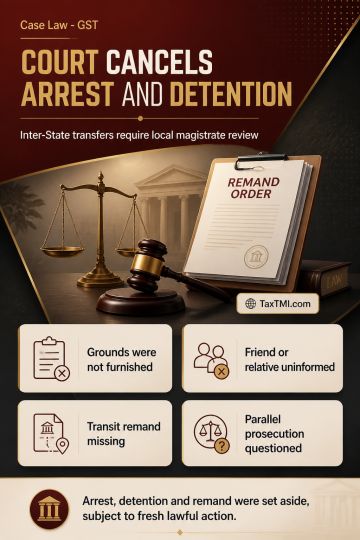
Arrest safeguards and transit remand requirements invalidated detention following inter-State transfer without communicated grounds or magistrate auth...
Arrest safeguards require disclosed grounds, relative intimation and transit remand, while duplicate prosecution under the CGST framework is unsustain...
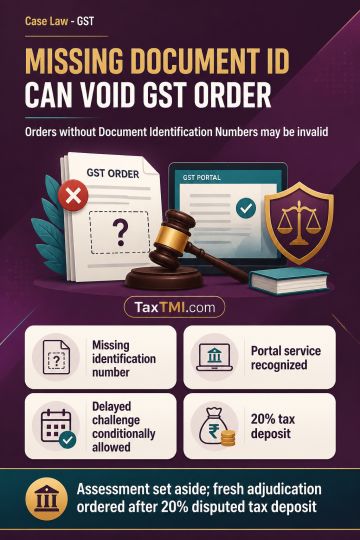
Document Identification Number defects can invalidate GST assessments, with delayed challenges entertained conditionally where patent irregularities e...
Windmill commissioning evidence supported higher depreciation where grid connection and electricity generation proved operational use before the relev...
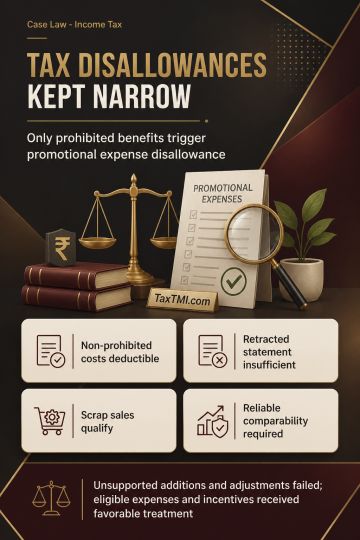
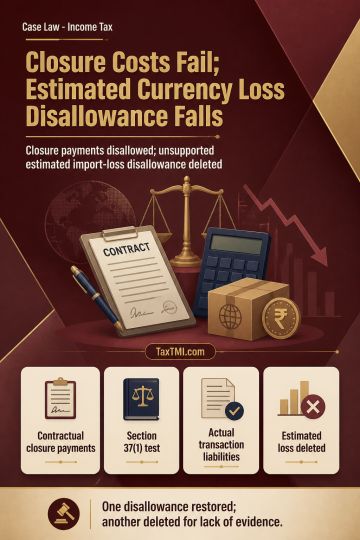
Pharmaceutical promotion and transfer-pricing comparability principles limited disallowances, while uncorroborated search allegations and unsupported ...
Page of 4796
Press 'Enter' after typing page number.
661 to 680 of 95918 Results
❮
❯
❯❯
0 / 200
Expand Note
Add to Folder
No Folders have been created
+
Are you sure you want to delete "My most important" ?
The ITAT allowed the appeal of a public charitable trust, holding that the provisions of section 167A and the application of the maximum marginal rate (MMR) under section 167B are not applicable. The tribunal found that the trust's constitution and functions do not permit allocation of income shares among members, negating the relevance of individual shares being determinate or indeterminate. Consequently, the income of the trust must be taxed at normal rates applicable to an AOP or Body of Individuals, without surcharge under section 167B. The decision relied on consistent facts from subsequent assessment years and relevant CBDT circulars, affirming that the trust's income is not divisible among beneficiaries as in private trusts. The tribunal rejected the lower authorities' application of MMR and surcharge, emphasizing that the trust's public charitable nature excludes it from such provisions. The appeal was allowed accordingly.
The ITAT allowed the appeal of a public charitable trust, holding that the provisions of section 167A and the application of the maximum marginal rate (MMR) under section 167B are not applicable. The tribunal found that the trust's constitution and functions do not permit allocation of income shares among members, negating the relevance of individual shares being determinate or indeterminate. Consequently, the income of the trust must be taxed at normal rates applicable to an AOP or Body of Individuals, without surcharge under section 167B. The decision relied on consistent facts from subsequent assessment years and relevant CBDT circulars, affirming that the trust's income is not divisible among beneficiaries as in private trusts. The tribunal rejected the lower authorities' application of MMR and surcharge, emphasizing that the trust's public charitable nature excludes it from such provisions. The appeal was allowed accordingly.
Note: It is a system-generated summary and is for quick reference only.
 TaxTMI
 of 4796















 Join Channel


 TaxTMI