Captive power transfer pricing and non-resident export commission rules support deletion of adjustments and withholding disallowance in discussed proc...
Cooperative society deposits, member-interest TDS exemption and credit-facility deduction claims require verification through records and supporting e...
Customs jurisdiction over EPCG condition breaches survives export-obligation discharge certificates, requiring alleged fraud and misdeclaration to be ...
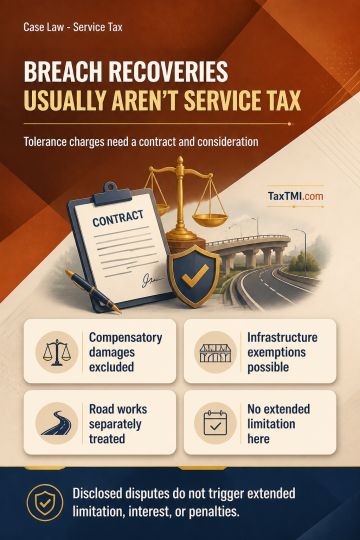
Contractual tolerance requires consideration; breach recoveries, qualifying public infrastructure services and road works escape service tax liability...
The ITAT upheld the revision order passed under section 263, affirming that the assessment order issued under section 144 ex parte was justified due to the assessee's failure to appear despite proper notice. The Tribunal noted the assessee's challenge to the assessment before the CIT(A), which remains pending. The AO's additions under sections 43B, 68 read with 115BBE, and estimated long-term capital gains were scrutinized, with the PCIT highlighting procedural irregularities in income estimation and the existence of two sets of financial statements. The Tribunal found no error in the PCIT's conclusion that the assessment was prejudicial to Revenue, particularly due to non-consideration of section 45(4). Consequently, the order under section 263 setting aside the assessment for fresh adjudication after affording the assessee a reasonable opportunity of hearing was upheld, and the appeal filed by the assessee was dismissed.
The ITAT upheld the revision order passed under section 263, affirming that the assessment order issued under section 144 ex parte was justified due to the assessee's failure to appear despite proper notice. The Tribunal noted the assessee's challenge to the assessment before the CIT(A), which remains pending. The AO's additions under sections 43B, 68 read with 115BBE, and estimated long-term capital gains were scrutinized, with the PCIT highlighting procedural irregularities in income estimation and the existence of two sets of financial statements. The Tribunal found no error in the PCIT's conclusion that the assessment was prejudicial to Revenue, particularly due to non-consideration of section 45(4). Consequently, the order under section 263 setting aside the assessment for fresh adjudication after affording the assessee a reasonable opportunity of hearing was upheld, and the appeal filed by the assessee was dismissed.
Note: It is a system-generated summary and is for quick reference only.
 TaxTMI
 of 4800













 Join Channel


 TaxTMI
