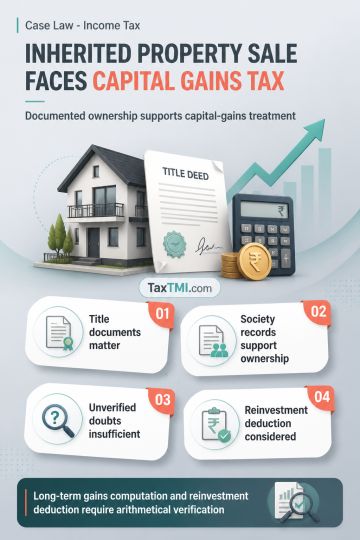
Inherited property sale proceeds require capital-gains treatment where ownership is supported by evidence, not suspicion or unverified signature doubt...
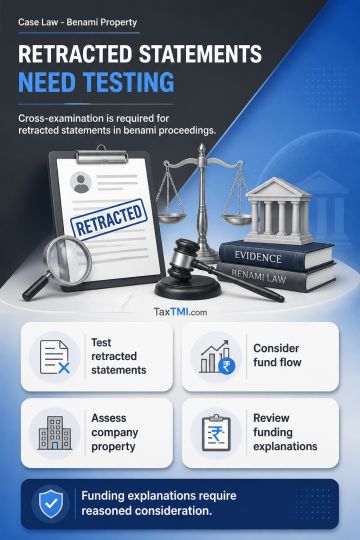
Cross-examination of retracted statements is essential where foundational evidence supports a benami allegation and documented funding explanations re...
Capital-goods exemption covers plant-modernisation accessories, while the import restriction applies only to earlier capital-goods components and spar...
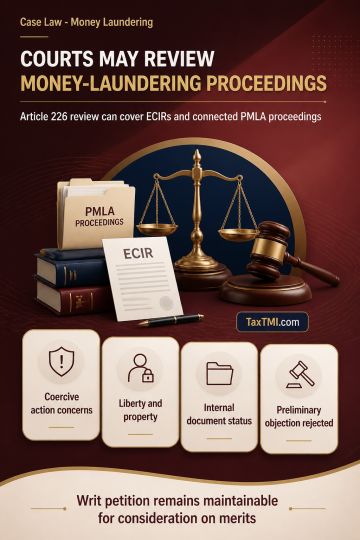
Constitutional judicial review permits challenges to ECIRs and connected money-laundering proceedings where coercive action affects fundamental intere...
The ITAT upheld the revision order passed under section 263, affirming that the assessment order issued under section 144 ex parte was justified due to the assessee's failure to appear despite proper notice. The Tribunal noted the assessee's challenge to the assessment before the CIT(A), which remains pending. The AO's additions under sections 43B, 68 read with 115BBE, and estimated long-term capital gains were scrutinized, with the PCIT highlighting procedural irregularities in income estimation and the existence of two sets of financial statements. The Tribunal found no error in the PCIT's conclusion that the assessment was prejudicial to Revenue, particularly due to non-consideration of section 45(4). Consequently, the order under section 263 setting aside the assessment for fresh adjudication after affording the assessee a reasonable opportunity of hearing was upheld, and the appeal filed by the assessee was dismissed.
The ITAT upheld the revision order passed under section 263, affirming that the assessment order issued under section 144 ex parte was justified due to the assessee's failure to appear despite proper notice. The Tribunal noted the assessee's challenge to the assessment before the CIT(A), which remains pending. The AO's additions under sections 43B, 68 read with 115BBE, and estimated long-term capital gains were scrutinized, with the PCIT highlighting procedural irregularities in income estimation and the existence of two sets of financial statements. The Tribunal found no error in the PCIT's conclusion that the assessment was prejudicial to Revenue, particularly due to non-consideration of section 45(4). Consequently, the order under section 263 setting aside the assessment for fresh adjudication after affording the assessee a reasonable opportunity of hearing was upheld, and the appeal filed by the assessee was dismissed.
Note: It is a system-generated summary and is for quick reference only.
 TaxTMI
 of 4792














 Join Channel


 TaxTMI