Service of notice and contractual debt acknowledgment preserved insolvency admission against a corporate guarantor despite limitation and natural just...
Original works exemption excludes standalone boulder transportation, leaving subcontracted railway-project transport services subject to service tax l...
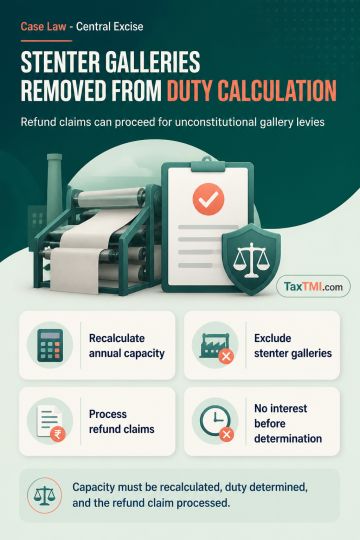
Annual production capacity determinations excluding stenter galleries support refunds for unconstitutional excise levies without an unjust-enrichment ...
Vicarious liability for cheque dishonour requires specific allegations of responsibility and cheque signatory; generic director allegations cannot sus...
IT Resilience Index requires market infrastructure institutions to automate resilience scoring, early warnings, and continuous service-delivery monito...
The ITAT held that the revisionary order passed by the PCIT under section 263 was unsustainable. The PCIT failed to make a conclusive finding that the additional depreciation claims on certain assets were wrongly allowed, and improperly directed the AO to disallow these claims without verification. The finding of erroneous depreciation on the residential building was flawed, as it disregarded binding judicial precedents favorable to the assessee. Regarding disallowance under section 14A, the PCIT usurped the AO's exclusive jurisdiction to record dissatisfaction with the assessee's explanation and could not direct disallowance under Rule 8D. The PCIT's attempt to reduce the written down value by carried forward additional depreciation before allowing current depreciation was contrary to statutory provisions and principles of statutory interpretation. The Tribunal concluded that the revision was a misuse of power, and accordingly allowed the assessee's appeal.
The ITAT held that the revisionary order passed by the PCIT under section 263 was unsustainable. The PCIT failed to make a conclusive finding that the additional depreciation claims on certain assets were wrongly allowed, and improperly directed the AO to disallow these claims without verification. The finding of erroneous depreciation on the residential building was flawed, as it disregarded binding judicial precedents favorable to the assessee. Regarding disallowance under section 14A, the PCIT usurped the AO's exclusive jurisdiction to record dissatisfaction with the assessee's explanation and could not direct disallowance under Rule 8D. The PCIT's attempt to reduce the written down value by carried forward additional depreciation before allowing current depreciation was contrary to statutory provisions and principles of statutory interpretation. The Tribunal concluded that the revision was a misuse of power, and accordingly allowed the assessee's appeal.
Note: It is a system-generated summary and is for quick reference only.
 TaxTMI
  TaxTMI
 of 4828



















 Join Channel