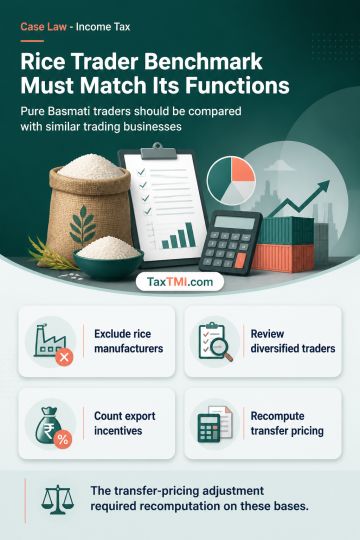
TNMM functional comparability requires excluding rice manufacturers from a pure Basmati rice trader's benchmark and recognising operating export recei...
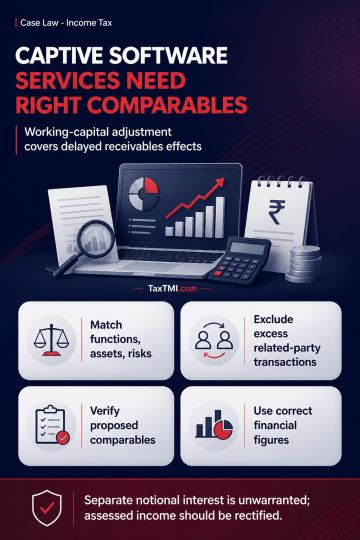
Working-capital adjustment subsumes delayed-receivable effects in TNMM benchmarking of captive software-development services, avoiding separate notion...
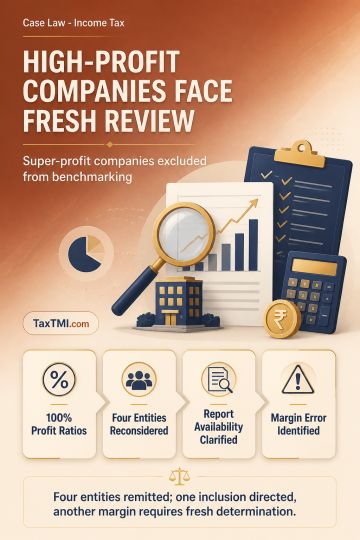
Transfer-pricing comparability requires exclusion of financially illogical super-profit comparables and correction of unsupported annual-report and ma...
Charitable character assessment preserves Section 80G approval despite inclusive spiritual teachings and incidental religious expenditure within the s...
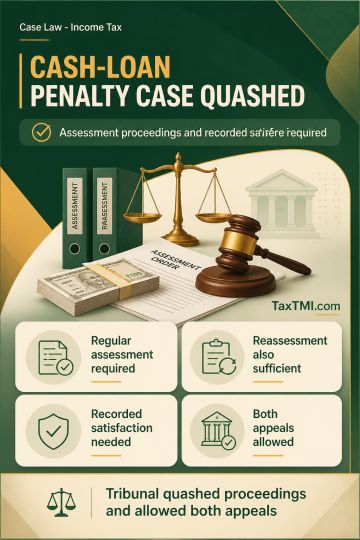
Penalty proceedings for cash-loan acceptance require assessment proceedings and recorded Assessing Officer satisfaction; absent these, the proceedings...
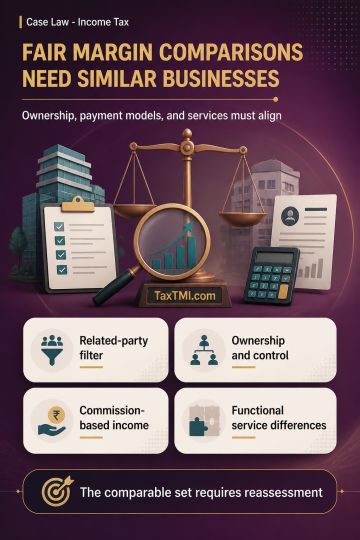
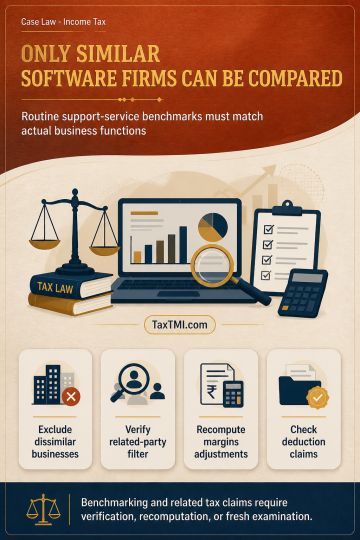
Functional comparability governs software-service benchmarking: dissimilar companies are excluded, while related-party filters, margins and working-ca...
The ITAT partially allowed the appeal, reducing the total disallowance related to labour expenses, subcontractor payments, and purchases. The tribunal held that the entire cash withdrawal of Rs.16.57 crore could not be disallowed due to lack of conclusive proof of misuse, restricting disallowance to 10% (Rs.1.67 crore) on an ad hoc basis. Disallowance of payments to subcontractors was deleted for lack of legally admissible evidence and credible documentary proof. Similarly, disallowance of purchases amounting to Rs.17.84 crore was set aside due to insufficient evidence of bogus transactions, procedural deficiencies notwithstanding. Regarding payments to alleged bogus subcontractors, the tribunal noted inconsistencies in the assessee's defense and AO's approach, upholding only a 10% ad hoc disallowance for potential accommodation entries. Overall, the ITAT balanced revenue's concerns and assessee's evidence, sustaining limited disallowances while deleting the bulk of additions.
The ITAT partially allowed the appeal, reducing the total disallowance related to labour expenses, subcontractor payments, and purchases. The tribunal held that the entire cash withdrawal of Rs.16.57 crore could not be disallowed due to lack of conclusive proof of misuse, restricting disallowance to 10% (Rs.1.67 crore) on an ad hoc basis. Disallowance of payments to subcontractors was deleted for lack of legally admissible evidence and credible documentary proof. Similarly, disallowance of purchases amounting to Rs.17.84 crore was set aside due to insufficient evidence of bogus transactions, procedural deficiencies notwithstanding. Regarding payments to alleged bogus subcontractors, the tribunal noted inconsistencies in the assessee's defense and AO's approach, upholding only a 10% ad hoc disallowance for potential accommodation entries. Overall, the ITAT balanced revenue's concerns and assessee's evidence, sustaining limited disallowances while deleting the bulk of additions.
Note: It is a system-generated summary and is for quick reference only.
 TaxTMI
  TaxTMI
 of 4830





 Join Channel


