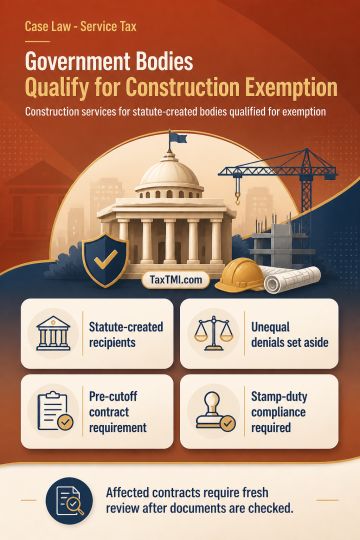
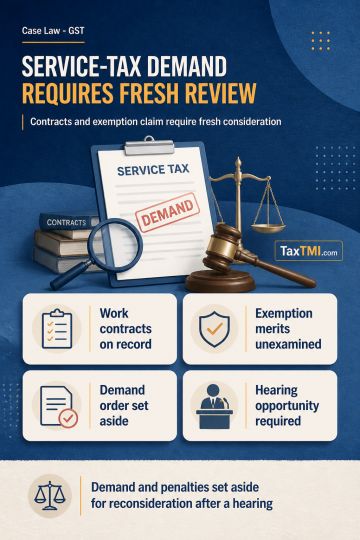
Governmental authority status supports construction-service exemption, while pre-cutoff contract and stamp-duty compliance requires verification on re...
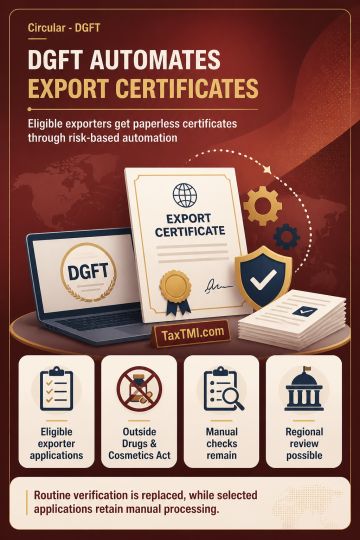
Automated Free Sale and Commerce Certificates enable paperless processing while retaining risk-based manual verification for selected exporter applica...
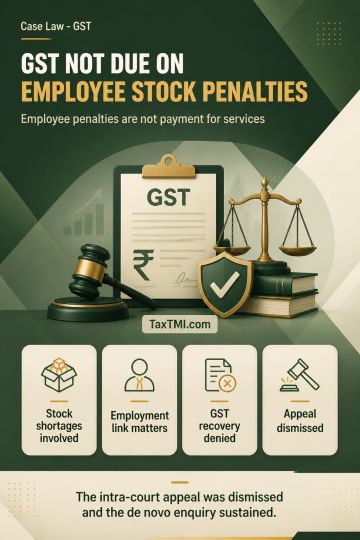
Employee stock-shortage penalties do not constitute consideration for services, preventing GST collection under Schedule II in employment relationship...
The ITAT dismissed the revenue's appeal regarding additions under section 153C, holding that incriminating documents found at the premises of an erstwhile partner could not be attributed to the assessee firm or its present partners. Only the erstwhile partner bore the legal presumption under section 292C. No incriminating material was found on the assessee, and additions based on such documents were rightly deleted. Regarding the addition under section 69B for alleged unexplained investment, the Tribunal found no concrete evidence of cash investment by the assessee and rejected the DVO's valuation, which was subjective and based on CPWD rates. The Tribunal further held that the AO could not rely on DVO valuation without rejecting the assessee's books, in line with established jurisdictional precedent. Allowing concessions for self-supervision and rate differentials, the Tribunal deleted the impugned addition in full, allowing the assessee's appeal.
The ITAT dismissed the revenue's appeal regarding additions under section 153C, holding that incriminating documents found at the premises of an erstwhile partner could not be attributed to the assessee firm or its present partners. Only the erstwhile partner bore the legal presumption under section 292C. No incriminating material was found on the assessee, and additions based on such documents were rightly deleted. Regarding the addition under section 69B for alleged unexplained investment, the Tribunal found no concrete evidence of cash investment by the assessee and rejected the DVO's valuation, which was subjective and based on CPWD rates. The Tribunal further held that the AO could not rely on DVO valuation without rejecting the assessee's books, in line with established jurisdictional precedent. Allowing concessions for self-supervision and rate differentials, the Tribunal deleted the impugned addition in full, allowing the assessee's appeal.
Note: It is a system-generated summary and is for quick reference only.
 TaxTMI
  TaxTMI
 of 4828



 Join Channel


