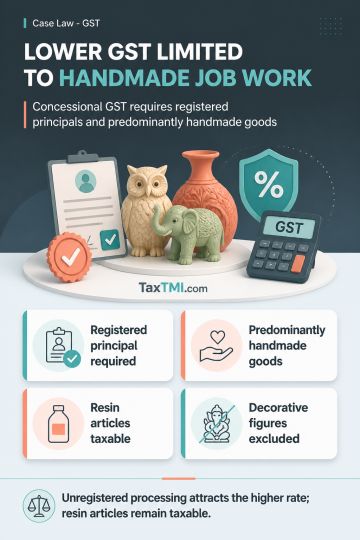
Handicraft job work receives concessional GST only for registered principals and predominantly handmade goods; commercial resin articles remain taxabl...
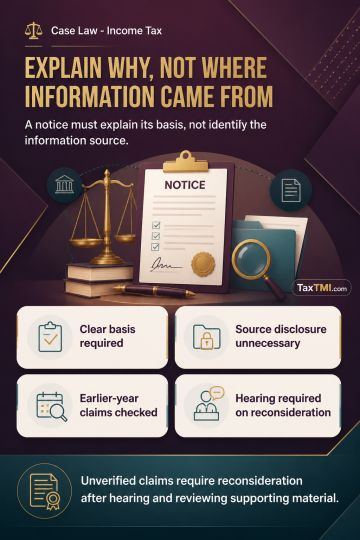
Reassessment disclosure requirements permit stated reasons without revealing information sources, but prior-taxation claims require full examination b...
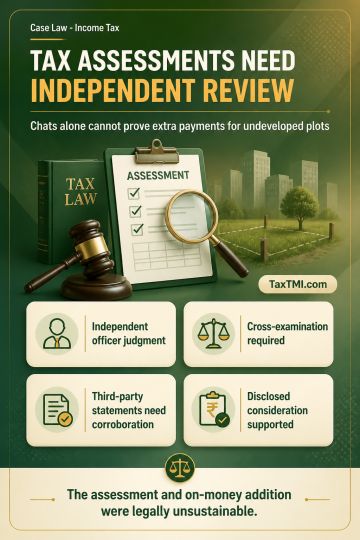
Independent assessment discretion and corroborated electronic evidence determine validity of on-money additions and undisclosed-consideration assessme...
The ITAT dismissed the revenue's appeal regarding additions under section 153C, holding that incriminating documents found at the premises of an erstwhile partner could not be attributed to the assessee firm or its present partners. Only the erstwhile partner bore the legal presumption under section 292C. No incriminating material was found on the assessee, and additions based on such documents were rightly deleted. Regarding the addition under section 69B for alleged unexplained investment, the Tribunal found no concrete evidence of cash investment by the assessee and rejected the DVO's valuation, which was subjective and based on CPWD rates. The Tribunal further held that the AO could not rely on DVO valuation without rejecting the assessee's books, in line with established jurisdictional precedent. Allowing concessions for self-supervision and rate differentials, the Tribunal deleted the impugned addition in full, allowing the assessee's appeal.
The ITAT dismissed the revenue's appeal regarding additions under section 153C, holding that incriminating documents found at the premises of an erstwhile partner could not be attributed to the assessee firm or its present partners. Only the erstwhile partner bore the legal presumption under section 292C. No incriminating material was found on the assessee, and additions based on such documents were rightly deleted. Regarding the addition under section 69B for alleged unexplained investment, the Tribunal found no concrete evidence of cash investment by the assessee and rejected the DVO's valuation, which was subjective and based on CPWD rates. The Tribunal further held that the AO could not rely on DVO valuation without rejecting the assessee's books, in line with established jurisdictional precedent. Allowing concessions for self-supervision and rate differentials, the Tribunal deleted the impugned addition in full, allowing the assessee's appeal.
Note: It is a system-generated summary and is for quick reference only.
 TaxTMI
  TaxTMI
 of 4828





 Join Channel


