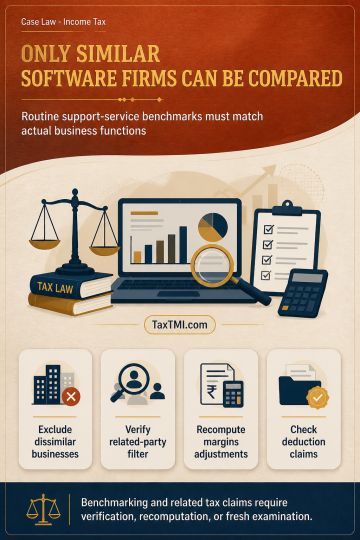
Functional comparability governs software-service benchmarking: dissimilar companies are excluded, while related-party filters, margins and working-ca...
The CESTAT held that the appellant was not liable to pay anti-dumping duty on aluminum alloy wheels imported during the relevant period, as there was no conclusive evidence of mis-declaration of country of origin or evasion of duty. The investigation revealed no imports from the alleged Taiwanese supplier for the consignments in question, and the certificate of origin suspected to be forged did not pertain to the appellant's imports. Furthermore, the assessments for the relevant bills of entry had been finalized within the statutory limitation period under Section 17(4) of the Customs Act, 1962, precluding reassessment. Consequently, the Tribunal found insufficient evidence to establish that the goods originated from China or were routed through Taiwan to evade anti-dumping duty. The impugned order imposing anti-dumping duty was therefore set aside, and the appeal was allowed.
The CESTAT held that the appellant was not liable to pay anti-dumping duty on aluminum alloy wheels imported during the relevant period, as there was no conclusive evidence of mis-declaration of country of origin or evasion of duty. The investigation revealed no imports from the alleged Taiwanese supplier for the consignments in question, and the certificate of origin suspected to be forged did not pertain to the appellant's imports. Furthermore, the assessments for the relevant bills of entry had been finalized within the statutory limitation period under Section 17(4) of the Customs Act, 1962, precluding reassessment. Consequently, the Tribunal found insufficient evidence to establish that the goods originated from China or were routed through Taiwan to evade anti-dumping duty. The impugned order imposing anti-dumping duty was therefore set aside, and the appeal was allowed.
Note: It is a system-generated summary and is for quick reference only.
 TaxTMI
  TaxTMI
 of 4828










 Join Channel


