Arrest safeguards require disclosed grounds, relative intimation and transit remand, while duplicate prosecution under the CGST framework is unsustain...
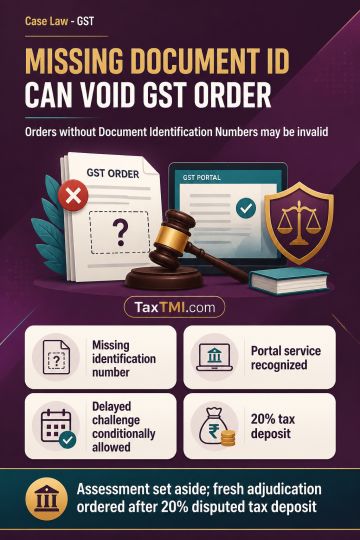
Document Identification Number defects can invalidate GST assessments, with delayed challenges entertained conditionally where patent irregularities e...
Windmill commissioning evidence supported higher depreciation where grid connection and electricity generation proved operational use before the relev...
Pharmaceutical promotion and transfer-pricing comparability principles limited disallowances, while uncorroborated search allegations and unsupported ...
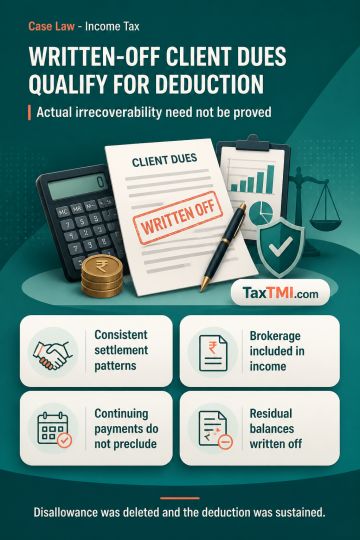
Business expenditure substantiation supports scrap credits, statutory payments and expense claims, while depreciation requires proof of actual busines...
The HC held that issuance of a single show cause notice encompassing multiple financial years contravenes the GST Act, which mandates that show cause notices must correspond to individual tax periods as defined under Section 2(106) and Sections 73/74. The Court emphasized that "bunching" violates principles of natural justice and statutory provisions, as each financial year constitutes a separate tax period. Furthermore, Section 128's provision for waiver schemes cannot justify pre-notification notices aggregating multiple years, as this imposes undue hardship on taxpayers. The Court clarified that show cause notices must be issued either based on annual returns after their filing or on monthly returns if issued prior to annual return submission. Accordingly, the petition challenging the validity of the multi-year show cause notice was allowed, reinforcing strict adherence to the statutory time limitation and procedural safeguards under the GST Act.
The HC held that issuance of a single show cause notice encompassing multiple financial years contravenes the GST Act, which mandates that show cause notices must correspond to individual tax periods as defined under Section 2(106) and Sections 73/74. The Court emphasized that "bunching" violates principles of natural justice and statutory provisions, as each financial year constitutes a separate tax period. Furthermore, Section 128's provision for waiver schemes cannot justify pre-notification notices aggregating multiple years, as this imposes undue hardship on taxpayers. The Court clarified that show cause notices must be issued either based on annual returns after their filing or on monthly returns if issued prior to annual return submission. Accordingly, the petition challenging the validity of the multi-year show cause notice was allowed, reinforcing strict adherence to the statutory time limitation and procedural safeguards under the GST Act.
Note: It is a system-generated summary and is for quick reference only.
 TaxTMI
 of 4805



















 Join Channel


 TaxTMI