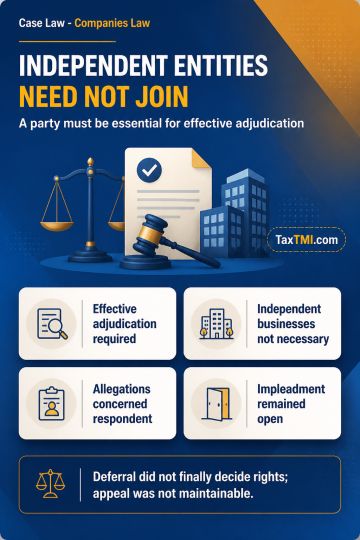
Necessary-party requirements limit impleadment of independent entities, while deferred consideration does not create an appealable adverse determinati...
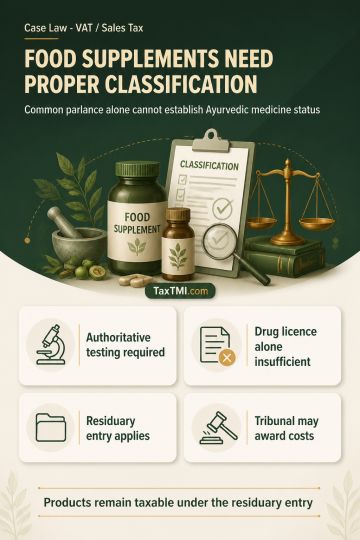
Food supplement classification requires common parlance and authoritative tests, preventing treatment as proprietary Ayurvedic medicines without suppo...
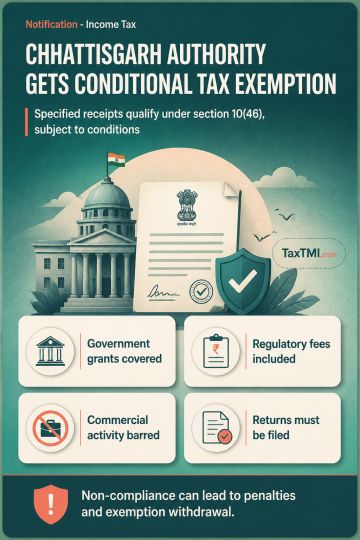
Specified regulatory authority income receives conditional tax exemption, subject to non-commercial activity, unchanged income character, and return f...
Tax exemption for regulatory authority income applies retrospectively, subject to non-commercial activity, unchanged income sources, and return-filing...
Input tax credit conditions remain constitutionally valid, with eligible recipient claims considered under GST circulars and retrospective filing dead...
The HC held that issuance of a single show cause notice encompassing multiple financial years contravenes the GST Act, which mandates that show cause notices must correspond to individual tax periods as defined under Section 2(106) and Sections 73/74. The Court emphasized that "bunching" violates principles of natural justice and statutory provisions, as each financial year constitutes a separate tax period. Furthermore, Section 128's provision for waiver schemes cannot justify pre-notification notices aggregating multiple years, as this imposes undue hardship on taxpayers. The Court clarified that show cause notices must be issued either based on annual returns after their filing or on monthly returns if issued prior to annual return submission. Accordingly, the petition challenging the validity of the multi-year show cause notice was allowed, reinforcing strict adherence to the statutory time limitation and procedural safeguards under the GST Act.
The HC held that issuance of a single show cause notice encompassing multiple financial years contravenes the GST Act, which mandates that show cause notices must correspond to individual tax periods as defined under Section 2(106) and Sections 73/74. The Court emphasized that "bunching" violates principles of natural justice and statutory provisions, as each financial year constitutes a separate tax period. Furthermore, Section 128's provision for waiver schemes cannot justify pre-notification notices aggregating multiple years, as this imposes undue hardship on taxpayers. The Court clarified that show cause notices must be issued either based on annual returns after their filing or on monthly returns if issued prior to annual return submission. Accordingly, the petition challenging the validity of the multi-year show cause notice was allowed, reinforcing strict adherence to the statutory time limitation and procedural safeguards under the GST Act.
Note: It is a system-generated summary and is for quick reference only.
 TaxTMI
 of 4805












 Join Channel


 TaxTMI
