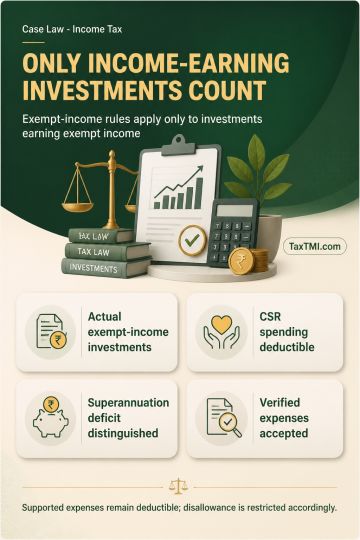
Exempt-income expenditure disallowance is confined to investments that actually generated exempt income, while supported business expenses remain dedu...
Objective characteristics and principal use govern mining-tyre classification, while fresh advance ruling applications may rely on additional technica...
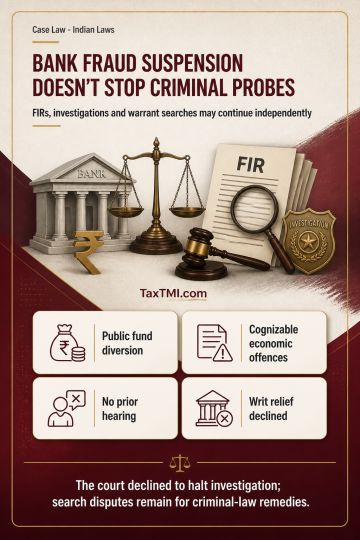
Administrative fraud classification suspension does not halt independent criminal investigation or warrant-based searches into alleged economic offenc...
The HC upheld the dismissal of the appeal filed three years and twenty days beyond the prescribed limitation period, affirming that the appellate authority's power to condone delay is strictly limited to thirty days. The court relied on established precedents interpreting analogous statutory provisions, emphasizing that no residual discretion exists to extend limitation beyond the specified period under the relevant Acts. Consequently, the writ petition challenging the order was dismissed, reinforcing the principle that courts and tribunals cannot entertain appeals filed beyond the statutory time frame except within narrowly prescribed limits.
The HC upheld the dismissal of the appeal filed three years and twenty days beyond the prescribed limitation period, affirming that the appellate authority's power to condone delay is strictly limited to thirty days. The court relied on established precedents interpreting analogous statutory provisions, emphasizing that no residual discretion exists to extend limitation beyond the specified period under the relevant Acts. Consequently, the writ petition challenging the order was dismissed, reinforcing the principle that courts and tribunals cannot entertain appeals filed beyond the statutory time frame except within narrowly prescribed limits.
Note: It is a system-generated summary and is for quick reference only.
 TaxTMI
 of 4805
















 Join Channel


 TaxTMI