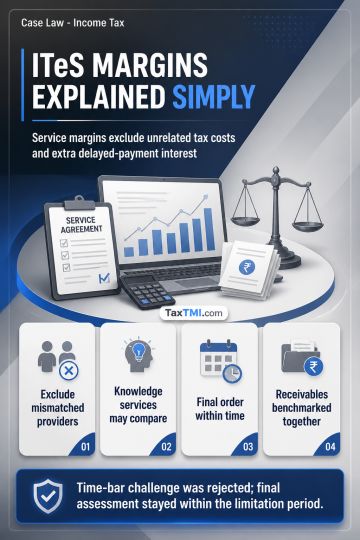
Transfer-pricing treatment of ITeS margins excludes pass-through tax recoveries and separate delayed-receivables interest after working-capital adjust...
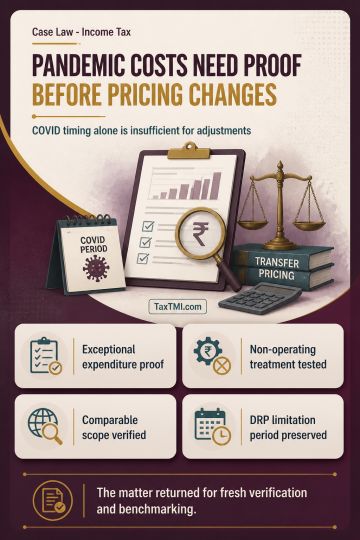
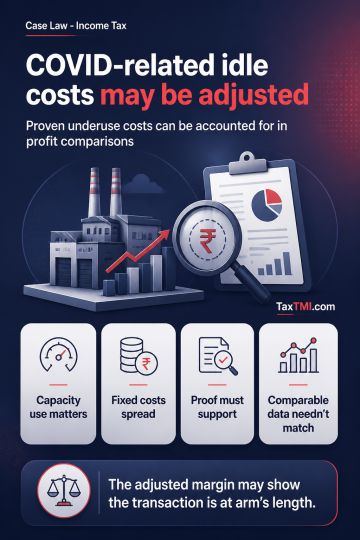
Capacity-utilisation adjustments under TNMM can neutralise substantiated COVID-related idle costs where underutilisation materially affects profitabil...
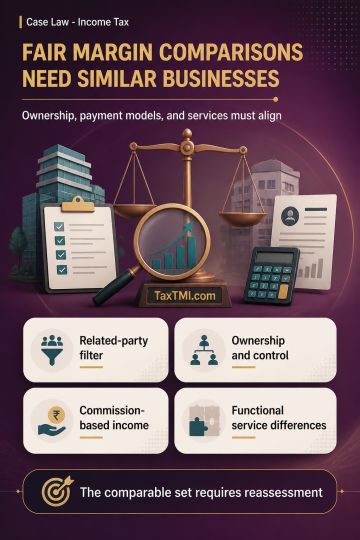
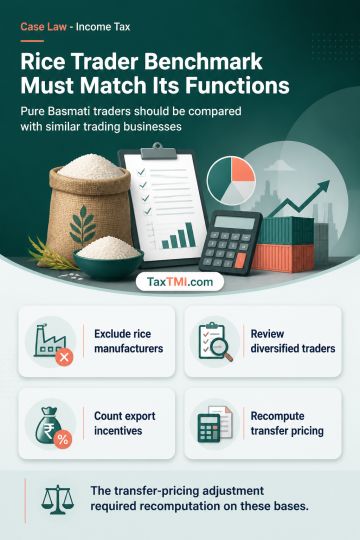
TNMM functional comparability requires excluding rice manufacturers from a pure Basmati rice trader's benchmark and recognising operating export recei...
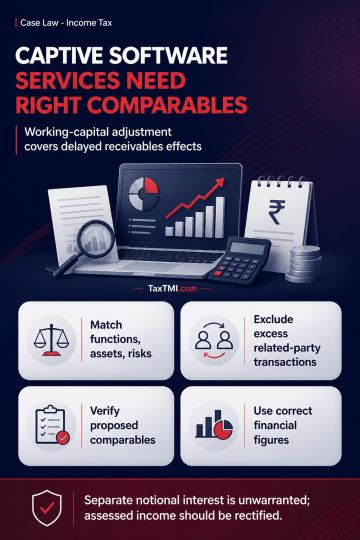
Working-capital adjustment subsumes delayed-receivable effects in TNMM benchmarking of captive software-development services, avoiding separate notion...
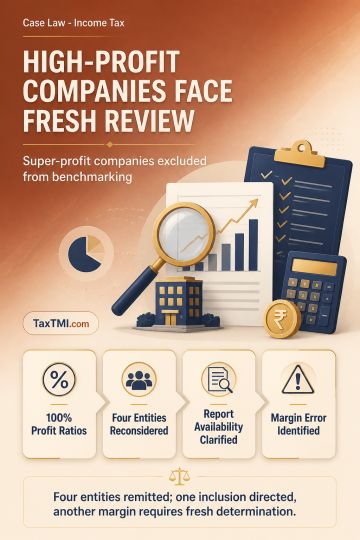
Transfer-pricing comparability requires exclusion of financially illogical super-profit comparables and correction of unsupported annual-report and ma...
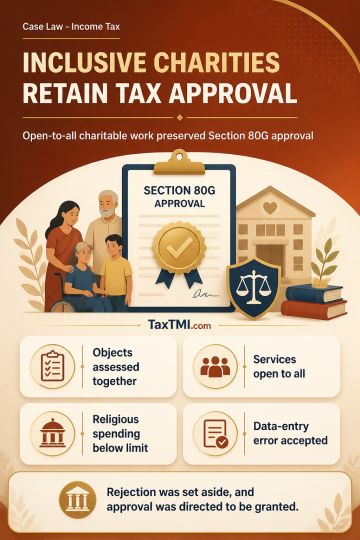
Charitable character assessment preserves Section 80G approval despite inclusive spiritual teachings and incidental religious expenditure within the s...
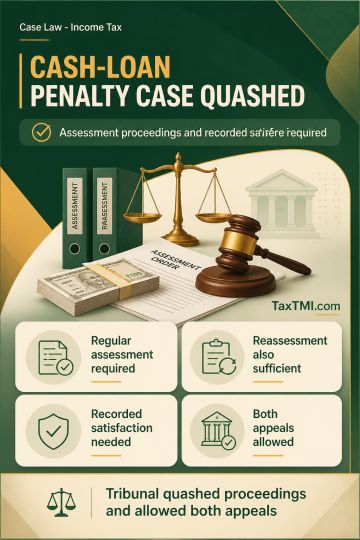
Penalty proceedings for cash-loan acceptance require assessment proceedings and recorded Assessing Officer satisfaction; absent these, the proceedings...
Page of 4828
Press 'Enter' after typing page number.
161 to 180 of 96556 Results
❮
❯
❯❯
0 / 200
Expand Note
Add to Folder
No Folders have been created
+
Are you sure you want to delete "My most important" ?
The reviewed legislative clauses primarily involve textual simplifications and consolidations of provisions from the Income-Tax Act, 1961, into the Income-Tax Bill, 2025, without substantive policy changes. Key provisions address double taxation relief, transfer pricing, advance pricing agreements, safe harbour rules, and general anti-avoidance rules, maintaining their original intents while enhancing clarity and reducing litigation risks. Several drafting errors and ambiguities were identified, including incorrect cross-references, omission of critical definitions, and inconsistent terminology, which the Committee recommends be rectified to ensure legal precision and consistency. Specific concerns were raised regarding the treatment of registered non-profit organizations, particularly the definitions of charitable purposes, taxability of anonymous donations, and the concept of "regular income," prompting calls for redrafting to prevent unintended adverse impacts. The Committee also emphasized the need for a clean legislative break from references to repealed Acts, consolidating such references under repeal and savings provisions. Overall, the Committee accepts the clauses subject to recommended drafting corrections to uphold clarity, fairness, and effective tax administration.
The reviewed legislative clauses primarily involve textual simplifications and consolidations of provisions from the Income-Tax Act, 1961, into the Income-Tax Bill, 2025, without substantive policy changes. Key provisions address double taxation relief, transfer pricing, advance pricing agreements, safe harbour rules, and general anti-avoidance rules, maintaining their original intents while enhancing clarity and reducing litigation risks. Several drafting errors and ambiguities were identified, including incorrect cross-references, omission of critical definitions, and inconsistent terminology, which the Committee recommends be rectified to ensure legal precision and consistency. Specific concerns were raised regarding the treatment of registered non-profit organizations, particularly the definitions of charitable purposes, taxability of anonymous donations, and the concept of "regular income," prompting calls for redrafting to prevent unintended adverse impacts. The Committee also emphasized the need for a clean legislative break from references to repealed Acts, consolidating such references under repeal and savings provisions. Overall, the Committee accepts the clauses subject to recommended drafting corrections to uphold clarity, fairness, and effective tax administration.
Note: It is a system-generated summary and is for quick reference only.
 TaxTMI
  TaxTMI
 of 4828



 Join Channel