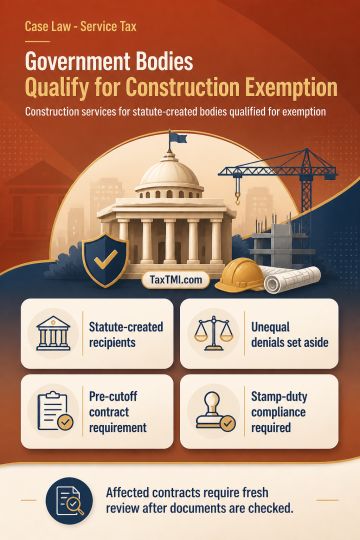
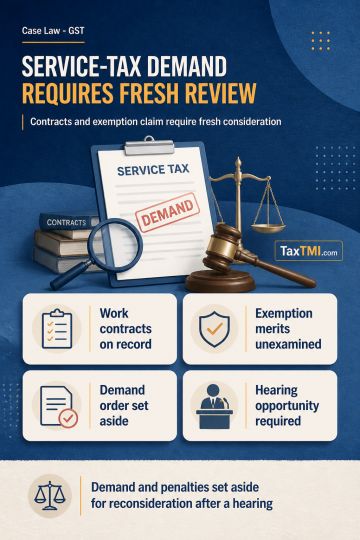
Governmental authority status supports construction-service exemption, while pre-cutoff contract and stamp-duty compliance requires verification on re...
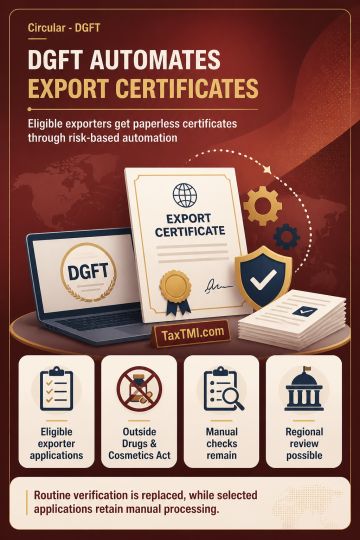
Automated Free Sale and Commerce Certificates enable paperless processing while retaining risk-based manual verification for selected exporter applica...
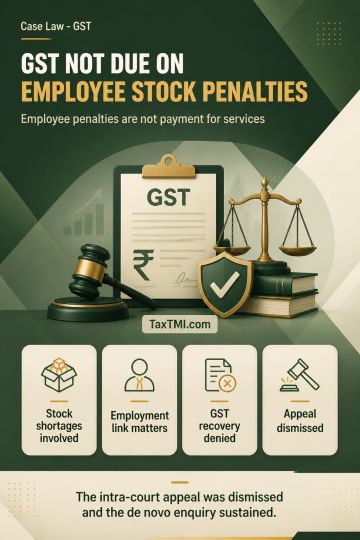
Employee stock-shortage penalties do not constitute consideration for services, preventing GST collection under Schedule II in employment relationship...
The reviewed legislative clauses primarily involve textual simplifications and consolidations of provisions from the Income-Tax Act, 1961, into the Income-Tax Bill, 2025, without substantive policy changes. Key provisions address double taxation relief, transfer pricing, advance pricing agreements, safe harbour rules, and general anti-avoidance rules, maintaining their original intents while enhancing clarity and reducing litigation risks. Several drafting errors and ambiguities were identified, including incorrect cross-references, omission of critical definitions, and inconsistent terminology, which the Committee recommends be rectified to ensure legal precision and consistency. Specific concerns were raised regarding the treatment of registered non-profit organizations, particularly the definitions of charitable purposes, taxability of anonymous donations, and the concept of "regular income," prompting calls for redrafting to prevent unintended adverse impacts. The Committee also emphasized the need for a clean legislative break from references to repealed Acts, consolidating such references under repeal and savings provisions. Overall, the Committee accepts the clauses subject to recommended drafting corrections to uphold clarity, fairness, and effective tax administration.
The reviewed legislative clauses primarily involve textual simplifications and consolidations of provisions from the Income-Tax Act, 1961, into the Income-Tax Bill, 2025, without substantive policy changes. Key provisions address double taxation relief, transfer pricing, advance pricing agreements, safe harbour rules, and general anti-avoidance rules, maintaining their original intents while enhancing clarity and reducing litigation risks. Several drafting errors and ambiguities were identified, including incorrect cross-references, omission of critical definitions, and inconsistent terminology, which the Committee recommends be rectified to ensure legal precision and consistency. Specific concerns were raised regarding the treatment of registered non-profit organizations, particularly the definitions of charitable purposes, taxability of anonymous donations, and the concept of "regular income," prompting calls for redrafting to prevent unintended adverse impacts. The Committee also emphasized the need for a clean legislative break from references to repealed Acts, consolidating such references under repeal and savings provisions. Overall, the Committee accepts the clauses subject to recommended drafting corrections to uphold clarity, fairness, and effective tax administration.
Note: It is a system-generated summary and is for quick reference only.
 TaxTMI
  TaxTMI
 of 4828



 Join Channel


