Patent-settlement expenditure treated as commercially expedient revenue outlay, with foreign-law restrictions inapplicable before the prospective amen...
International transaction benchmarking restricts transfer pricing adjustments to associated-enterprise dealings, while functional comparability govern...
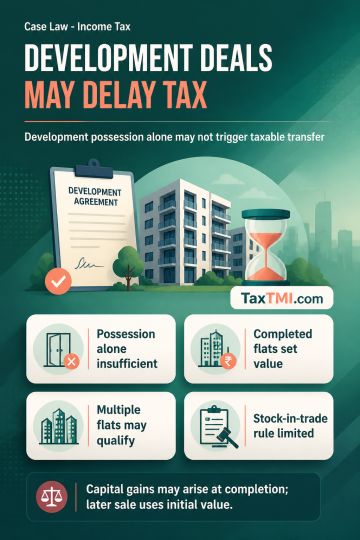
Joint development agreements defer taxable transfer where possession lacks part performance, while completed flats determine consideration and exempti...
Passenger baggage re-export requires true declaration and cannot be granted indirectly through discretionary redemption of undeclared prohibited goods...
Page of 4803
Press 'Enter' after typing page number.
501 to 520 of 96046 Results
❮
❯
❯❯
0 / 200
Expand Note
Add to Folder
No Folders have been created
+
Are you sure you want to delete "My most important" ?
The HC held that issuance of a composite show cause notice (SCN) covering multiple financial years under the GST Act is impermissible. Each financial year constitutes a separate tax period with distinct limitation periods under Sections 73 and 74. The limitation of three or five years applies individually to each financial year and cannot be aggregated or carried forward to justify a bundled SCN. Issuing a single SCN for multiple years violates the statutory scheme, frustrates the limitation framework, and infringes the taxpayer's right to contest year-specific demands, resulting in jurisdictional overreach and rendering such orders void ab initio. The GST Act mandates SCNs to be issued based on the relevant tax period-monthly or annual returns-and prohibits issuance beyond the prescribed period. Accordingly, the petition challenging the bunching of SCNs was allowed, reaffirming that separate adjudication per financial year is legally required.
The HC held that issuance of a composite show cause notice (SCN) covering multiple financial years under the GST Act is impermissible. Each financial year constitutes a separate tax period with distinct limitation periods under Sections 73 and 74. The limitation of three or five years applies individually to each financial year and cannot be aggregated or carried forward to justify a bundled SCN. Issuing a single SCN for multiple years violates the statutory scheme, frustrates the limitation framework, and infringes the taxpayer's right to contest year-specific demands, resulting in jurisdictional overreach and rendering such orders void ab initio. The GST Act mandates SCNs to be issued based on the relevant tax period-monthly or annual returns-and prohibits issuance beyond the prescribed period. Accordingly, the petition challenging the bunching of SCNs was allowed, reaffirming that separate adjudication per financial year is legally required.
Note: It is a system-generated summary and is for quick reference only.
 TaxTMI
 of 4803













 Join Channel


 TaxTMI