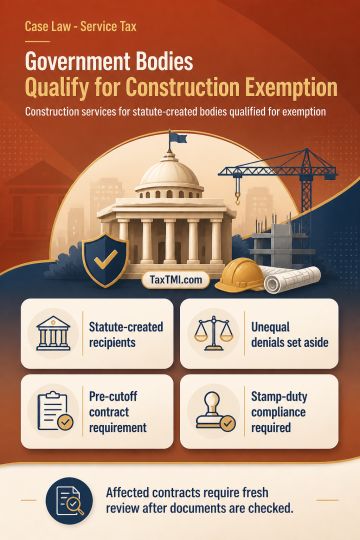
Governmental authority status supports construction-service exemption, while pre-cutoff contract and stamp-duty compliance requires verification on re...
Automated Free Sale and Commerce Certificates enable paperless processing while retaining risk-based manual verification for selected exporter applica...
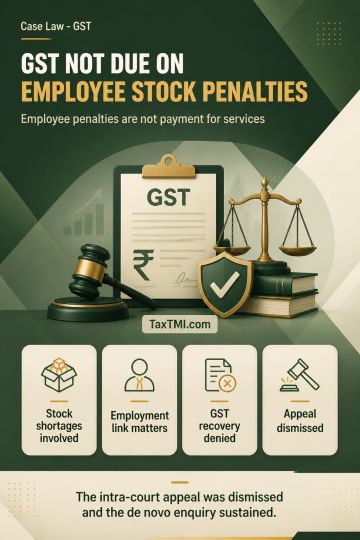
Employee stock-shortage penalties do not constitute consideration for services, preventing GST collection under Schedule II in employment relationship...
Clause 448 of the Income Tax Bill, 2025, establishes a penalty equal to the amount of tax not deducted or paid for failures related to tax deduction at source (TDS), replacing and consolidating provisions under Section 271C of the Income-tax Act, 1961. It applies to failures to deduct tax under Chapter XIX-B or to pay or ensure payment as specified in certain notes of the Bill. The penalty is imposed by the Assessing Officer, who has discretionary power, though the clause lacks explicit reference to a "reasonable cause" defense available under the current law. Compared to Section 271C, Clause 448 streamlines scope through broader chapter references and tables, potentially increasing administrative efficiency but raising concerns about interpretative clarity and fairness. The provision aims to strengthen enforcement and deterrence but may expose taxpayers to stricter penalties for inadvertent defaults unless further clarifications or safeguards are introduced.
Clause 448 of the Income Tax Bill, 2025, establishes a penalty equal to the amount of tax not deducted or paid for failures related to tax deduction at source (TDS), replacing and consolidating provisions under Section 271C of the Income-tax Act, 1961. It applies to failures to deduct tax under Chapter XIX-B or to pay or ensure payment as specified in certain notes of the Bill. The penalty is imposed by the Assessing Officer, who has discretionary power, though the clause lacks explicit reference to a "reasonable cause" defense available under the current law. Compared to Section 271C, Clause 448 streamlines scope through broader chapter references and tables, potentially increasing administrative efficiency but raising concerns about interpretative clarity and fairness. The provision aims to strengthen enforcement and deterrence but may expose taxpayers to stricter penalties for inadvertent defaults unless further clarifications or safeguards are introduced.
Note: It is a system-generated summary and is for quick reference only.
 TaxTMI
  TaxTMI
 of 4828








 Join Channel


