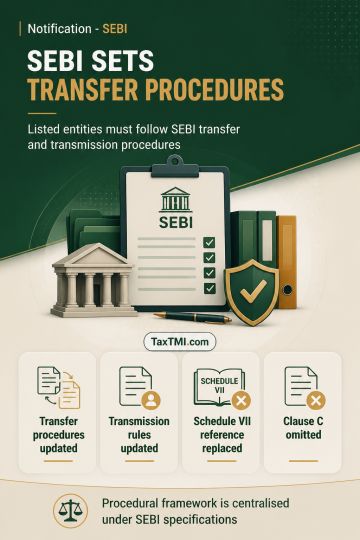
Specified income of Baddi Barotiwala Nalagarh Development Authority receives conditional tax exemption, retrospectively covering its designated assess...
Specified development authority income receives retrospective tax exemption, subject to non-commercial activity, unchanged income sources, and return-...
Unified Brand India framework introduces voluntary Trust Mark certification and funding support for export branding, packaging and global promotional ...
Origin Declaration authentication governs preferential tariff claims under India-UK CETA, requiring a validated reference number before import clearan...
Separate assessment orders for different years remain valid when distinct notices and hearing opportunities prevent prejudice from combined proceeding...
The HC upheld the cancellation of the petitioner's GST registration under Section 29(2)(c) of the CGST Act, 2017, due to non-filing of returns for six consecutive months. However, acknowledging the serious civil consequences of such cancellation, the court directed that the petitioner may apply for restoration of registration by submitting all pending returns and paying outstanding tax dues, interest, and late fees in accordance with the proviso to sub-rule (4) of Rule 22 of the CGST Rules, 2017. The empowered officer retains jurisdiction to consider the restoration application and pass appropriate orders within the statutory framework. The petitioner was granted two months to approach the concerned authority for restoration. The writ petition was disposed of on these terms.
The HC upheld the cancellation of the petitioner's GST registration under Section 29(2)(c) of the CGST Act, 2017, due to non-filing of returns for six consecutive months. However, acknowledging the serious civil consequences of such cancellation, the court directed that the petitioner may apply for restoration of registration by submitting all pending returns and paying outstanding tax dues, interest, and late fees in accordance with the proviso to sub-rule (4) of Rule 22 of the CGST Rules, 2017. The empowered officer retains jurisdiction to consider the restoration application and pass appropriate orders within the statutory framework. The petitioner was granted two months to approach the concerned authority for restoration. The writ petition was disposed of on these terms.
Note: It is a system-generated summary and is for quick reference only.
 TaxTMI
 of 4807













 Join Channel


 TaxTMI