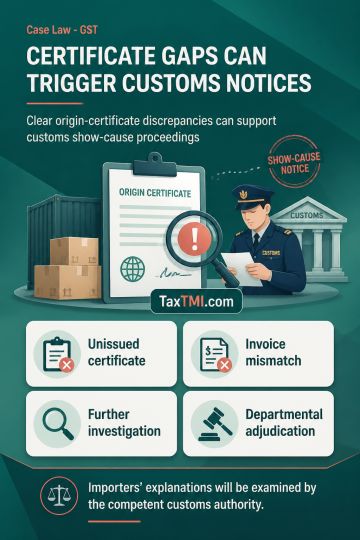
Jurisdictional facts in certificate-of-origin discrepancies can support customs show-cause proceedings, leaving factual explanations for departmental ...
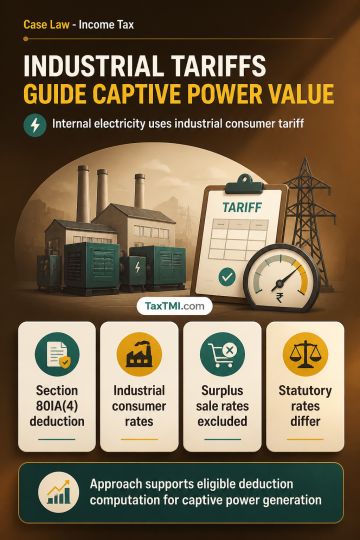
Market value for captive electricity consumption follows industrial consumer tariffs, supporting profit computation for the power generation deduction...
The HC upheld the cancellation of the petitioner's GST registration under Section 29(2)(c) of the CGST Act, 2017, due to non-filing of returns for six consecutive months. However, acknowledging the serious civil consequences of such cancellation, the court directed that the petitioner may apply for restoration of registration by submitting all pending returns and paying outstanding tax dues, interest, and late fees in accordance with the proviso to sub-rule (4) of Rule 22 of the CGST Rules, 2017. The empowered officer retains jurisdiction to consider the restoration application and pass appropriate orders within the statutory framework. The petitioner was granted two months to approach the concerned authority for restoration. The writ petition was disposed of on these terms.
The HC upheld the cancellation of the petitioner's GST registration under Section 29(2)(c) of the CGST Act, 2017, due to non-filing of returns for six consecutive months. However, acknowledging the serious civil consequences of such cancellation, the court directed that the petitioner may apply for restoration of registration by submitting all pending returns and paying outstanding tax dues, interest, and late fees in accordance with the proviso to sub-rule (4) of Rule 22 of the CGST Rules, 2017. The empowered officer retains jurisdiction to consider the restoration application and pass appropriate orders within the statutory framework. The petitioner was granted two months to approach the concerned authority for restoration. The writ petition was disposed of on these terms.
Note: It is a system-generated summary and is for quick reference only.
 TaxTMI
 of 4805







 Join Channel


 TaxTMI