Pre-existing operational debt disputes require genuine evidence, while undirected running-account payments may be appropriated on a first-in-first-out...
Agency in CNG distribution makes outlet operators commission agents, rendering taxable Business Auxiliary Service rather than purchasing goods for res...
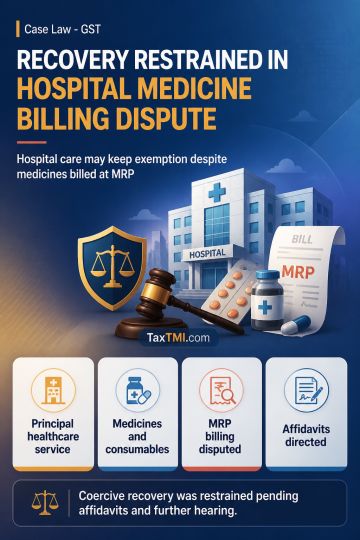
Composite inpatient healthcare supply may retain exemption despite MRP medicine billing, while separate taxable sale characterisation remains disputed...
Working-capital adjustment determines whether software-services transfer-pricing margins fall within the statutory tolerance range, eliminating any ad...
Page of 4798
Press 'Enter' after typing page number.
921 to 940 of 95957 Results
❮
❯
❯❯
0 / 200
Expand Note
Add to Folder
No Folders have been created
+
Are you sure you want to delete "My most important" ?
The AT dismissed all appeals challenging the provisional attachment orders under the Prevention of Money Laundering Act. The appellants failed to satisfactorily disclose legitimate sources for the funds used to acquire properties or repay loans, with statements under Section 50(2) of the Act corroborating the involvement of proceeds of crime. The tribunal found that the properties and transactions were part of layering operations orchestrated by the main accused to conceal illicit funds. Despite claims of gifts and income, appellants could not provide adequate documentary evidence or credible explanations to rebut the attachment. The respondent's actions in attaching properties and bank accounts linked to the accused and their relatives were held to be justified. No interference was warranted with the provisional attachment orders, as the material on record supported the conclusion that the assets were proceeds of crime.
The AT dismissed all appeals challenging the provisional attachment orders under the Prevention of Money Laundering Act. The appellants failed to satisfactorily disclose legitimate sources for the funds used to acquire properties or repay loans, with statements under Section 50(2) of the Act corroborating the involvement of proceeds of crime. The tribunal found that the properties and transactions were part of layering operations orchestrated by the main accused to conceal illicit funds. Despite claims of gifts and income, appellants could not provide adequate documentary evidence or credible explanations to rebut the attachment. The respondent's actions in attaching properties and bank accounts linked to the accused and their relatives were held to be justified. No interference was warranted with the provisional attachment orders, as the material on record supported the conclusion that the assets were proceeds of crime.
Note: It is a system-generated summary and is for quick reference only.
 TaxTMI
 of 4798

















 Join Channel


 TaxTMI