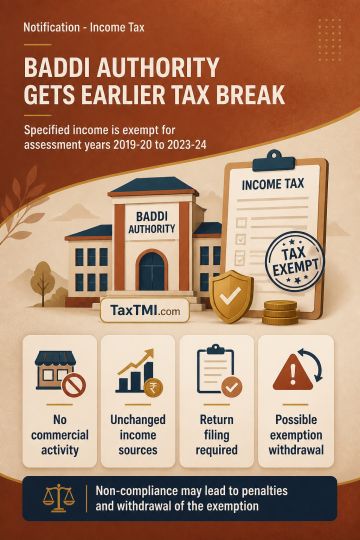
Specified development authority income receives retrospective tax exemption, subject to non-commercial activity, unchanged income sources, and return-...
Unified Brand India framework introduces voluntary Trust Mark certification and funding support for export branding, packaging and global promotional ...
Origin Declaration authentication governs preferential tariff claims under India-UK CETA, requiring a validated reference number before import clearan...
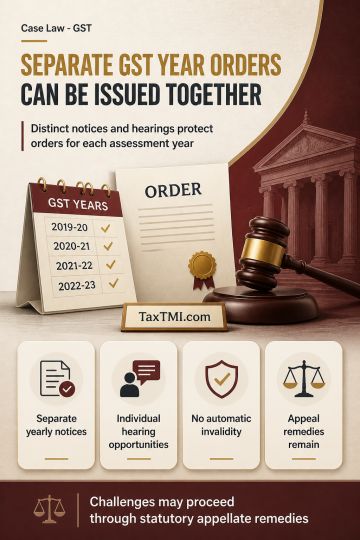
Separate assessment orders for different years remain valid when distinct notices and hearing opportunities prevent prejudice from combined proceeding...
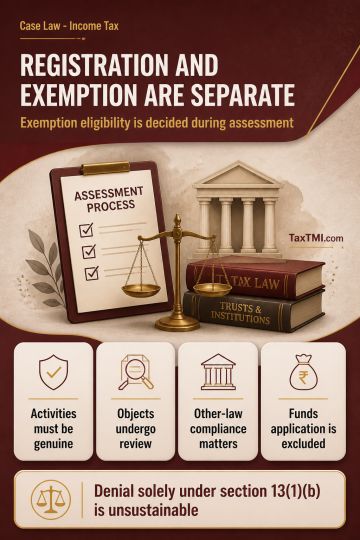
Defined public benefit can retain charitable character; registration renewal requires examining genuine activities and legal compliance, not surplus a...
Capital reduction is distinct from share buy-back, preventing buy-back tax; restructuring interest and related business deductions also survive scruti...
The ITAT upheld the ld.CIT(A)'s decision to treat the excess stock found during the survey as business income, dismissing the revenue's appeal. The AO failed to produce cogent evidence of income from sources other than the jewellery business. The tribunal accepted the assessee's explanation regarding the separate ledger for old gold purchases, increasing the book stock and reducing the excess stock to 11,390.212 grams. The addition was restricted accordingly. Regarding valuation, the tribunal rejected the AO and ld.CIT(A)'s higher rate of Rs. 2,800 per gram and the assessee's lower rate of Rs. 2,296 per gram, adopting Rs. 2,409 per gram as agreed by the assessee in correspondence, to compute income from excess stock. This approach balanced the competing valuations and concluded the matter.
The ITAT upheld the ld.CIT(A)'s decision to treat the excess stock found during the survey as business income, dismissing the revenue's appeal. The AO failed to produce cogent evidence of income from sources other than the jewellery business. The tribunal accepted the assessee's explanation regarding the separate ledger for old gold purchases, increasing the book stock and reducing the excess stock to 11,390.212 grams. The addition was restricted accordingly. Regarding valuation, the tribunal rejected the AO and ld.CIT(A)'s higher rate of Rs. 2,800 per gram and the assessee's lower rate of Rs. 2,296 per gram, adopting Rs. 2,409 per gram as agreed by the assessee in correspondence, to compute income from excess stock. This approach balanced the competing valuations and concluded the matter.
Note: It is a system-generated summary and is for quick reference only.
 TaxTMI
 of 4805















 Join Channel


 TaxTMI
