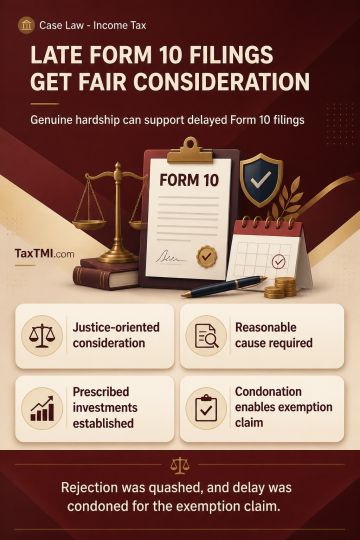
Specified regulatory authority income receives conditional tax exemption, subject to non-commercial activity, unchanged income character, and return f...
Tax exemption for regulatory authority income applies retrospectively, subject to non-commercial activity, unchanged income sources, and return-filing...
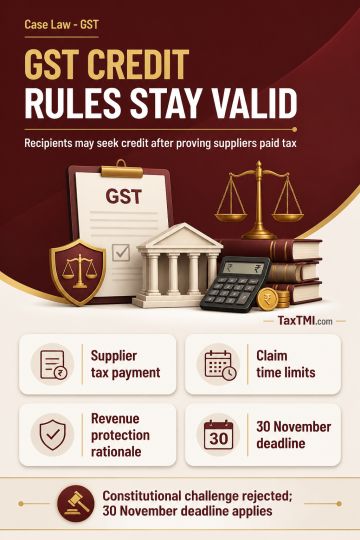
Input tax credit conditions remain constitutionally valid, with eligible recipient claims considered under GST circulars and retrospective filing dead...
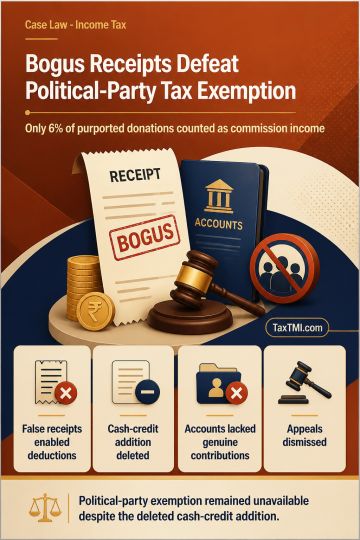
Bogus donation receipts justified commission income assessment and defeated political-party tax exemption for inaccurate accounts and reporting failur...
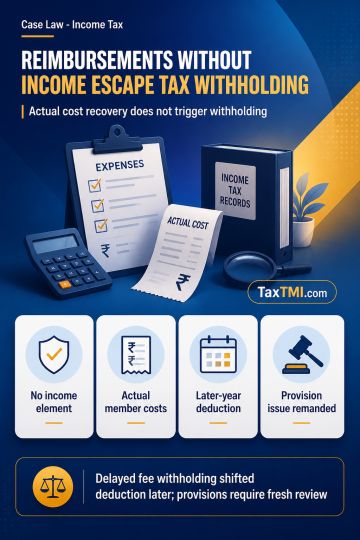
Pure reimbursement without income element escapes tax withholding, while delayed withholding and unsupported provisions face deferred or renewed scrut...
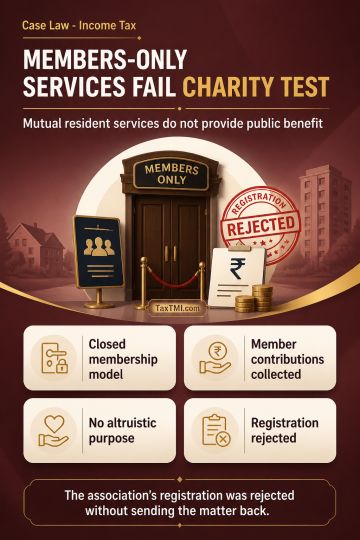
Public benefit requirement defeats charitable registration where residents' association services are reciprocal, member-only facilities governed by mu...
The ITAT upheld the ld.CIT(A)'s decision to treat the excess stock found during the survey as business income, dismissing the revenue's appeal. The AO failed to produce cogent evidence of income from sources other than the jewellery business. The tribunal accepted the assessee's explanation regarding the separate ledger for old gold purchases, increasing the book stock and reducing the excess stock to 11,390.212 grams. The addition was restricted accordingly. Regarding valuation, the tribunal rejected the AO and ld.CIT(A)'s higher rate of Rs. 2,800 per gram and the assessee's lower rate of Rs. 2,296 per gram, adopting Rs. 2,409 per gram as agreed by the assessee in correspondence, to compute income from excess stock. This approach balanced the competing valuations and concluded the matter.
The ITAT upheld the ld.CIT(A)'s decision to treat the excess stock found during the survey as business income, dismissing the revenue's appeal. The AO failed to produce cogent evidence of income from sources other than the jewellery business. The tribunal accepted the assessee's explanation regarding the separate ledger for old gold purchases, increasing the book stock and reducing the excess stock to 11,390.212 grams. The addition was restricted accordingly. Regarding valuation, the tribunal rejected the AO and ld.CIT(A)'s higher rate of Rs. 2,800 per gram and the assessee's lower rate of Rs. 2,296 per gram, adopting Rs. 2,409 per gram as agreed by the assessee in correspondence, to compute income from excess stock. This approach balanced the competing valuations and concluded the matter.
Note: It is a system-generated summary and is for quick reference only.
 TaxTMI
 of 4800








 Join Channel


 TaxTMI