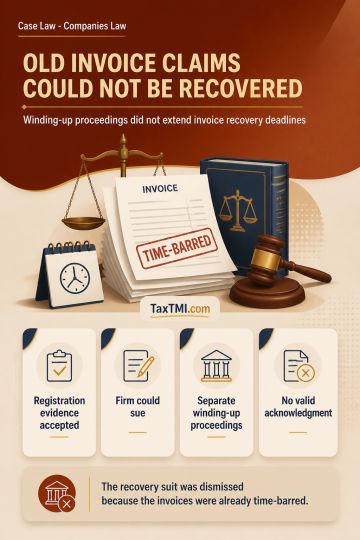
Invoice-based recovery claims remain time-barred despite separate winding-up proceedings, absent valid acknowledgment or part-payment of the disputed ...
Extended limitation fails without specific suppression allegations, while overseas employee secondment remains taxable as manpower supply within norma...
Time-share accommodation classification excludes Club or Association Service where purchasers receive contractual occupancy rights without genuine mem...
Page of 4790
Press 'Enter' after typing page number.
21 to 40 of 95794 Results
❮
❯
❯❯
0 / 200
Expand Note
Add to Folder
No Folders have been created
+
Are you sure you want to delete "My most important" ?
The HC upheld the imposition of penalty under section 114(i) of the CA against the CHA, affirming liability for failure to comply with mandated KYC requirements and proper verification of clients in transit clearance of Nepal-based cargo destined for export. The appellant's contention that absence of adjudicated abetment precluded penalty was rejected, as section 114(i) penalizes acts or omissions rendering goods liable to confiscation, with abetment being secondary. The Tribunal correctly emphasized the CHA's primary responsibility to fulfill statutory KYC norms rather than rely on oral information. Notwithstanding the established breach, the Tribunal exercised discretion to reduce the penalty from Rs. 50 Lakhs to Rs. 4 Lakhs. The HC found no substantial question of law warranting interference, resulting in dismissal of the appeal.
The HC upheld the imposition of penalty under section 114(i) of the CA against the CHA, affirming liability for failure to comply with mandated KYC requirements and proper verification of clients in transit clearance of Nepal-based cargo destined for export. The appellant's contention that absence of adjudicated abetment precluded penalty was rejected, as section 114(i) penalizes acts or omissions rendering goods liable to confiscation, with abetment being secondary. The Tribunal correctly emphasized the CHA's primary responsibility to fulfill statutory KYC norms rather than rely on oral information. Notwithstanding the established breach, the Tribunal exercised discretion to reduce the penalty from Rs. 50 Lakhs to Rs. 4 Lakhs. The HC found no substantial question of law warranting interference, resulting in dismissal of the appeal.
Note: It is a system-generated summary and is for quick reference only.
 TaxTMI
 of 4790


















 Join Channel


 TaxTMI

