Minimum alternate tax exclusions for pre-amendment banking companies and expatriate Indian branch salaries remain outside head office expenditure limi...
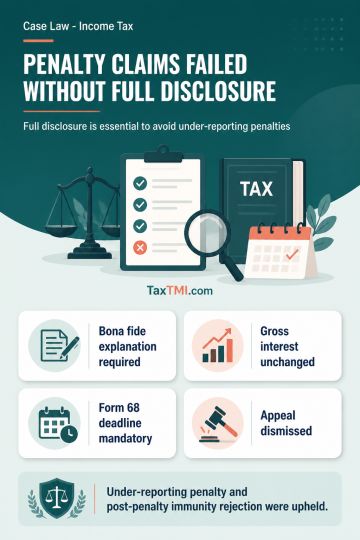
Bona fide disclosure requirements govern under-reporting penalties, and post-penalty immunity applications cannot secure available statutory protectio...
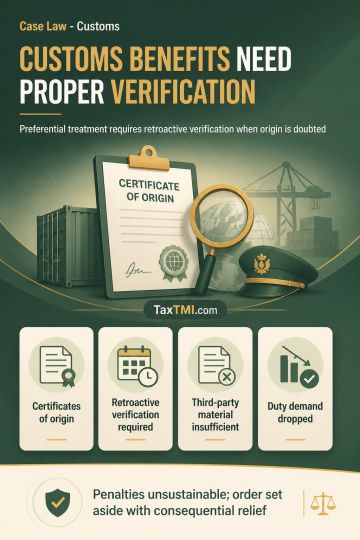
Certificate-of-origin verification procedure governs preferential customs benefits; denial without retroactive verification was set aside with consequ...
Disciplinary Committee jurisdiction and mandatory investigation requirements invalidated cancellation of an insolvency professional's registration and...
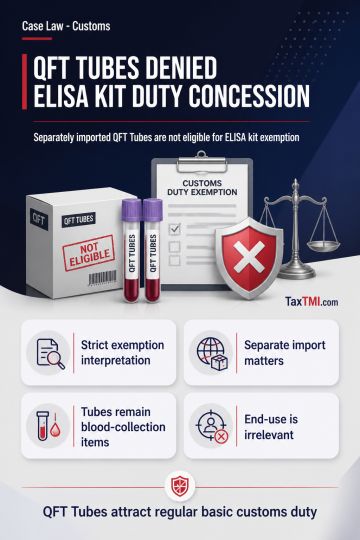
The CESTAT upheld the denial of exemption notification benefits to the appellant for ELISA test kits imported for food testing, confirming they are not exempt under the relevant notification. However, the Tribunal held that the Principal Commissioner erred in invoking the extended period of limitation under Section 28(4) of the Customs Act, 1962, as there was no suppression of material facts with intent to evade duty, and prior findings on this issue had not been reconsidered appropriately. Consequently, the confirmation of differential duty for the extended period was set aside. Furthermore, the imposition of penalty under Section 114A was quashed, as the grounds for penalty were the same as those for invoking the extended limitation period, which was unjustified. The appeal was allowed, affirming duty liability only for the normal limitation period and setting aside the extended period demand and penalty.
The CESTAT upheld the denial of exemption notification benefits to the appellant for ELISA test kits imported for food testing, confirming they are not exempt under the relevant notification. However, the Tribunal held that the Principal Commissioner erred in invoking the extended period of limitation under Section 28(4) of the Customs Act, 1962, as there was no suppression of material facts with intent to evade duty, and prior findings on this issue had not been reconsidered appropriately. Consequently, the confirmation of differential duty for the extended period was set aside. Furthermore, the imposition of penalty under Section 114A was quashed, as the grounds for penalty were the same as those for invoking the extended limitation period, which was unjustified. The appeal was allowed, affirming duty liability only for the normal limitation period and setting aside the extended period demand and penalty.
Note: It is a system-generated summary and is for quick reference only.
 TaxTMI
 of 4801











 Join Channel


 TaxTMI