Pre-existing operational debt disputes require genuine evidence, while undirected running-account payments may be appropriated on a first-in-first-out...
Agency in CNG distribution makes outlet operators commission agents, rendering taxable Business Auxiliary Service rather than purchasing goods for res...
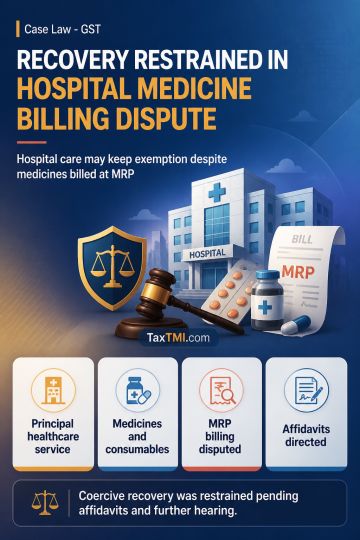
Composite inpatient healthcare supply may retain exemption despite MRP medicine billing, while separate taxable sale characterisation remains disputed...
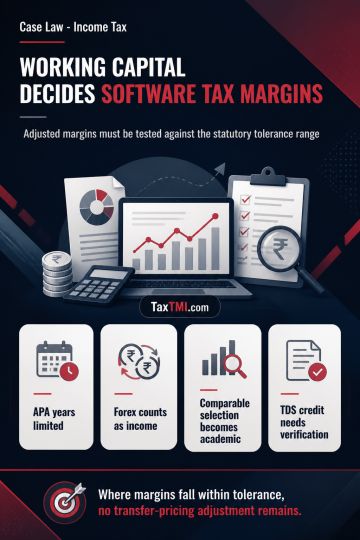
Working-capital adjustment determines whether software-services transfer-pricing margins fall within the statutory tolerance range, eliminating any ad...
Page of 4798
Press 'Enter' after typing page number.
921 to 940 of 95957 Results
❮
❯
❯❯
0 / 200
Expand Note
Add to Folder
No Folders have been created
+
Are you sure you want to delete "My most important" ?
The CESTAT upheld the denial of exemption notification benefits to the appellant for ELISA test kits imported for food testing, confirming they are not exempt under the relevant notification. However, the Tribunal held that the Principal Commissioner erred in invoking the extended period of limitation under Section 28(4) of the Customs Act, 1962, as there was no suppression of material facts with intent to evade duty, and prior findings on this issue had not been reconsidered appropriately. Consequently, the confirmation of differential duty for the extended period was set aside. Furthermore, the imposition of penalty under Section 114A was quashed, as the grounds for penalty were the same as those for invoking the extended limitation period, which was unjustified. The appeal was allowed, affirming duty liability only for the normal limitation period and setting aside the extended period demand and penalty.
The CESTAT upheld the denial of exemption notification benefits to the appellant for ELISA test kits imported for food testing, confirming they are not exempt under the relevant notification. However, the Tribunal held that the Principal Commissioner erred in invoking the extended period of limitation under Section 28(4) of the Customs Act, 1962, as there was no suppression of material facts with intent to evade duty, and prior findings on this issue had not been reconsidered appropriately. Consequently, the confirmation of differential duty for the extended period was set aside. Furthermore, the imposition of penalty under Section 114A was quashed, as the grounds for penalty were the same as those for invoking the extended limitation period, which was unjustified. The appeal was allowed, affirming duty liability only for the normal limitation period and setting aside the extended period demand and penalty.
Note: It is a system-generated summary and is for quick reference only.
 TaxTMI
 of 4798











 Join Channel


 TaxTMI