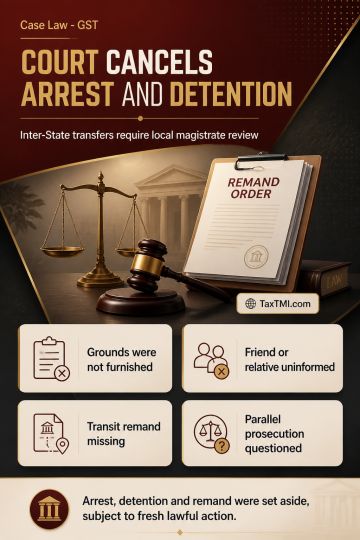
Arrest safeguards and transit remand requirements invalidated detention following inter-State transfer without communicated grounds or magistrate auth...
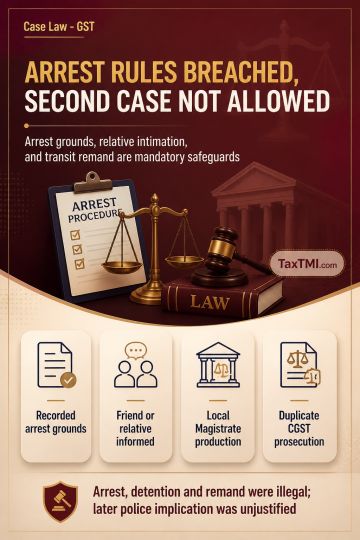
Arrest safeguards require disclosed grounds, relative intimation and transit remand, while duplicate prosecution under the CGST framework is unsustain...
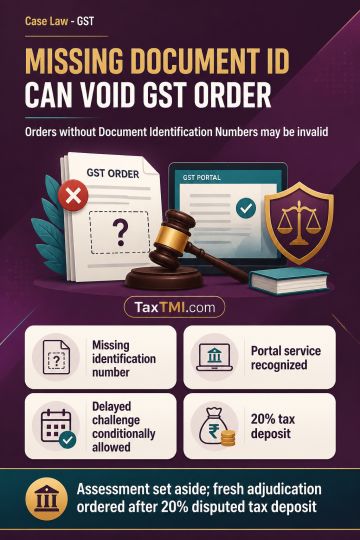
Document Identification Number defects can invalidate GST assessments, with delayed challenges entertained conditionally where patent irregularities e...
Windmill commissioning evidence supported higher depreciation where grid connection and electricity generation proved operational use before the relev...
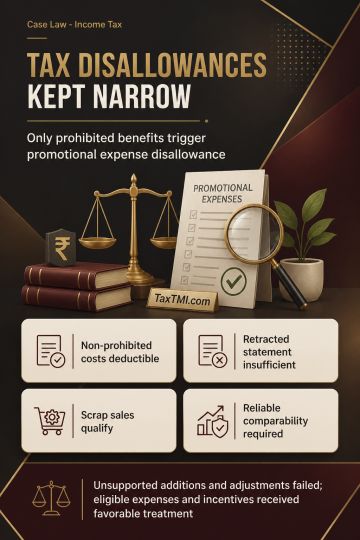
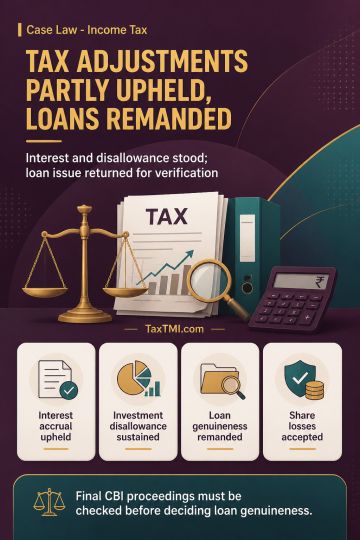
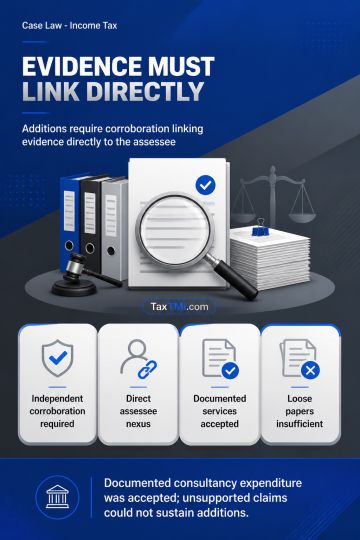
Pharmaceutical promotion and transfer-pricing comparability principles limited disallowances, while uncorroborated search allegations and unsupported ...
Business expenditure substantiation supports scrap credits, statutory payments and expense claims, while depreciation requires proof of actual busines...
The CESTAT upheld the denial of exemption notification benefits to the appellant for ELISA test kits imported for food testing, confirming they are not exempt under the relevant notification. However, the Tribunal held that the Principal Commissioner erred in invoking the extended period of limitation under Section 28(4) of the Customs Act, 1962, as there was no suppression of material facts with intent to evade duty, and prior findings on this issue had not been reconsidered appropriately. Consequently, the confirmation of differential duty for the extended period was set aside. Furthermore, the imposition of penalty under Section 114A was quashed, as the grounds for penalty were the same as those for invoking the extended limitation period, which was unjustified. The appeal was allowed, affirming duty liability only for the normal limitation period and setting aside the extended period demand and penalty.
The CESTAT upheld the denial of exemption notification benefits to the appellant for ELISA test kits imported for food testing, confirming they are not exempt under the relevant notification. However, the Tribunal held that the Principal Commissioner erred in invoking the extended period of limitation under Section 28(4) of the Customs Act, 1962, as there was no suppression of material facts with intent to evade duty, and prior findings on this issue had not been reconsidered appropriately. Consequently, the confirmation of differential duty for the extended period was set aside. Furthermore, the imposition of penalty under Section 114A was quashed, as the grounds for penalty were the same as those for invoking the extended limitation period, which was unjustified. The appeal was allowed, affirming duty liability only for the normal limitation period and setting aside the extended period demand and penalty.
Note: It is a system-generated summary and is for quick reference only.
 TaxTMI
 of 4792













 Join Channel


 TaxTMI