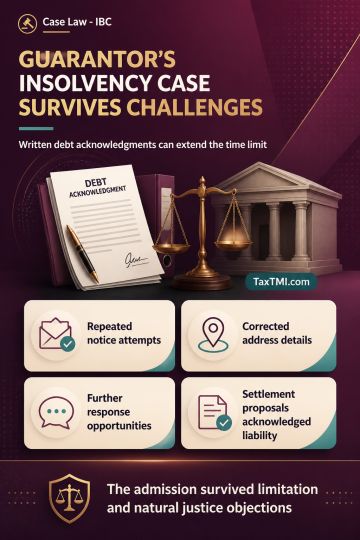
Service of notice and contractual debt acknowledgment preserved insolvency admission against a corporate guarantor despite limitation and natural just...
Original works exemption excludes standalone boulder transportation, leaving subcontracted railway-project transport services subject to service tax l...
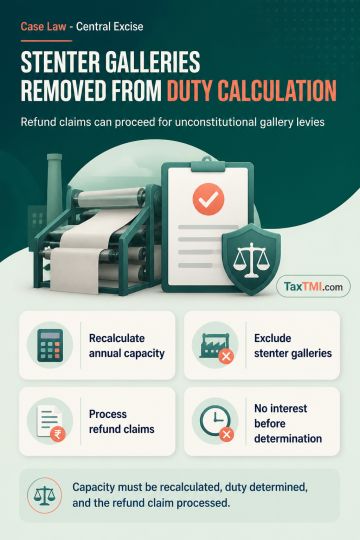
Annual production capacity determinations excluding stenter galleries support refunds for unconstitutional excise levies without an unjust-enrichment ...
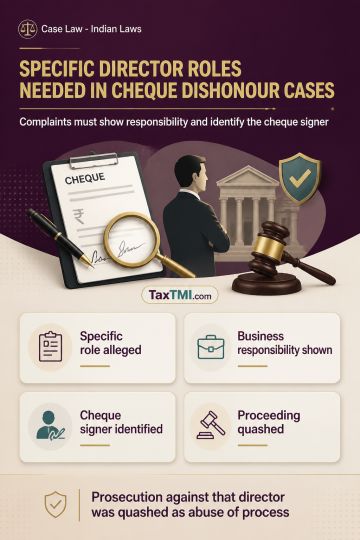
Vicarious liability for cheque dishonour requires specific allegations of responsibility and cheque signatory; generic director allegations cannot sus...
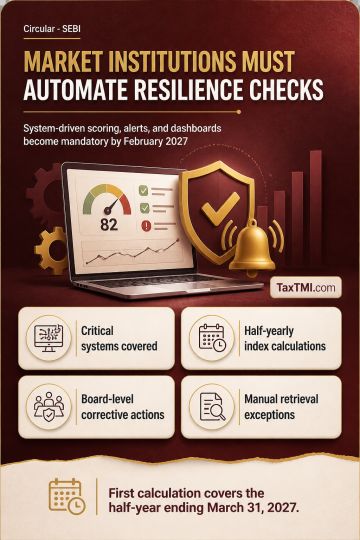
IT Resilience Index requires market infrastructure institutions to automate resilience scoring, early warnings, and continuous service-delivery monito...
Clause 444 of the Income Tax Bill, 2025, mirrors Section 271AAD of the Income-tax Act, 1961, imposing penalties equal to the aggregate amount of false or omitted accounting entries made with intent to evade tax. It applies to both the taxpayer and any person causing such entries, covering forged documents, invoices without actual supply, and transactions involving non-existent persons. The penalty can be imposed by the Assessing Officer and appellate authorities. While the provision aims to deter tax evasion and ensure accurate accounting, it introduces challenges including proving intent, defining third-party liability, and the absence of penalty mitigation mechanisms. Clause 444 consolidates existing policy with minimal changes, maintaining strict penalties and broad coverage, but may require further clarification to balance enforcement with fairness and reduce litigation over subjective elements like intent and causation.
Clause 444 of the Income Tax Bill, 2025, mirrors Section 271AAD of the Income-tax Act, 1961, imposing penalties equal to the aggregate amount of false or omitted accounting entries made with intent to evade tax. It applies to both the taxpayer and any person causing such entries, covering forged documents, invoices without actual supply, and transactions involving non-existent persons. The penalty can be imposed by the Assessing Officer and appellate authorities. While the provision aims to deter tax evasion and ensure accurate accounting, it introduces challenges including proving intent, defining third-party liability, and the absence of penalty mitigation mechanisms. Clause 444 consolidates existing policy with minimal changes, maintaining strict penalties and broad coverage, but may require further clarification to balance enforcement with fairness and reduce litigation over subjective elements like intent and causation.
Note: It is a system-generated summary and is for quick reference only.
 TaxTMI
  TaxTMI
 of 4828








 Join Channel