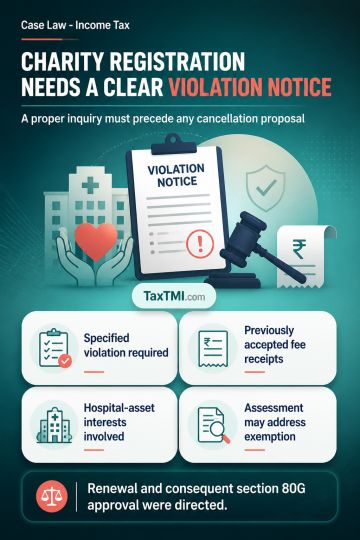
Charitable trust registration requires a specified-violation notice; settled cash deposits and related-party payments did not justify cancellation or ...
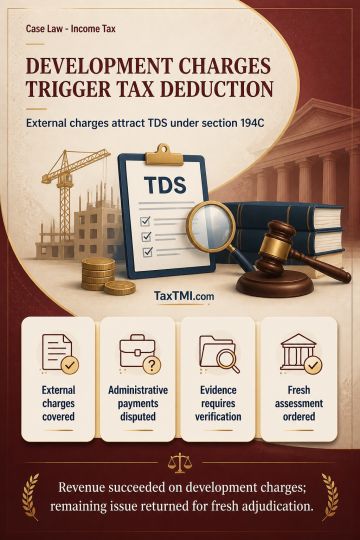
External development charges trigger TDS under section 194C, while disputed administrative payments require factual verification and fresh adjudicatio...
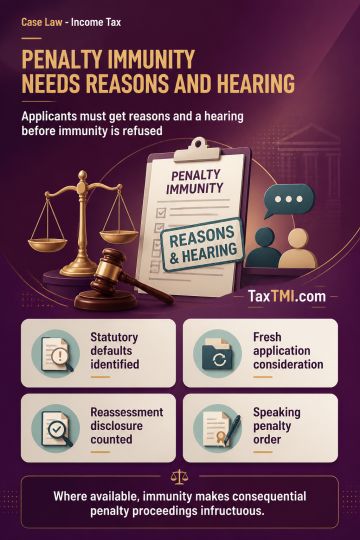
Section 270AA penalty immunity requires identified statutory defaults and a hearing before rejection; reassessment disclosure may constitute under-rep...
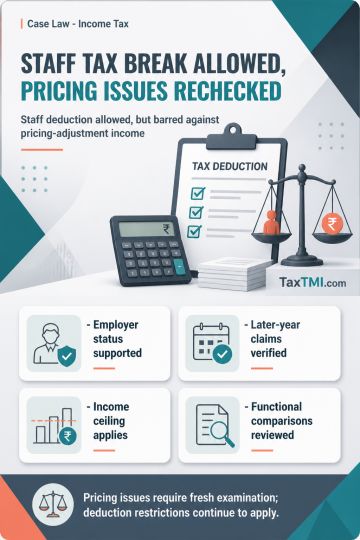
Section 80JJAA employee-cost deduction allowed for deployed staff but barred against transfer-pricing income enhancement, with pricing issues remanded...
Transfer-pricing methodology protects commercially genuine associated-enterprise payments, while pre-2016 secondary adjustments and related notional i...
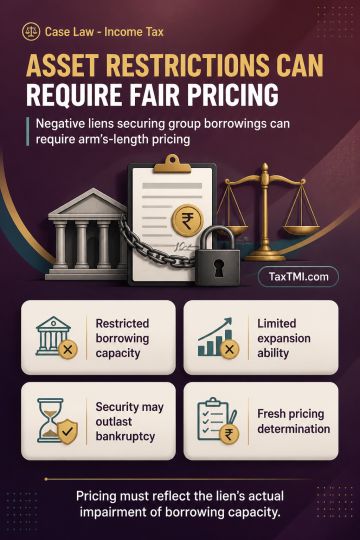
Negative liens over operating assets can constitute international transactions requiring arm's-length pricing reflecting restricted borrowing and expa...
Cross-examination rights in Customs Broker revocation inquiries require witness examination; procedural denial may be cured through fresh adjudication...
Clause 443 of the Income Tax Bill, 2025, modernizes and continues the penalty framework established by Section 271AAC of the Income-tax Act, 1961, targeting undisclosed or inadequately explained income such as cash credits, unexplained investments, money, expenditures, and hundi transactions. It imposes a fixed penalty of 10% on the tax payable for such income, in addition to the tax itself, to deter concealment and promote voluntary compliance. Exceptions apply if the income is disclosed and tax paid within the relevant year, and a bar prevents double penalties for the same income under other provisions. Procedural safeguards ensure due process. While both provisions share similar objectives and structures, Clause 443 updates references and procedural aspects to align with the new Bill. Potential issues include interpretation of "income determined," procedural application, and treatment of bona fide errors. The provision aims to balance deterrence with fairness, relying on effective implementation and judicial interpretation.
Clause 443 of the Income Tax Bill, 2025, modernizes and continues the penalty framework established by Section 271AAC of the Income-tax Act, 1961, targeting undisclosed or inadequately explained income such as cash credits, unexplained investments, money, expenditures, and hundi transactions. It imposes a fixed penalty of 10% on the tax payable for such income, in addition to the tax itself, to deter concealment and promote voluntary compliance. Exceptions apply if the income is disclosed and tax paid within the relevant year, and a bar prevents double penalties for the same income under other provisions. Procedural safeguards ensure due process. While both provisions share similar objectives and structures, Clause 443 updates references and procedural aspects to align with the new Bill. Potential issues include interpretation of "income determined," procedural application, and treatment of bona fide errors. The provision aims to balance deterrence with fairness, relying on effective implementation and judicial interpretation.
Note: It is a system-generated summary and is for quick reference only.
 TaxTMI
  TaxTMI
 of 4828


















 Join Channel


