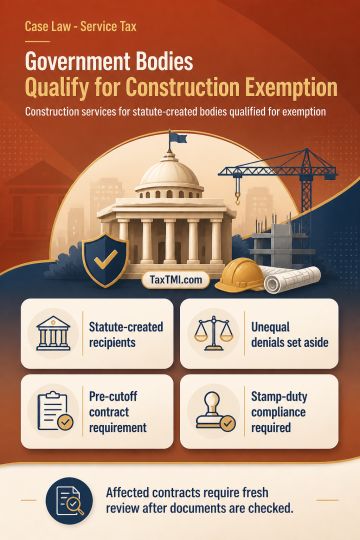
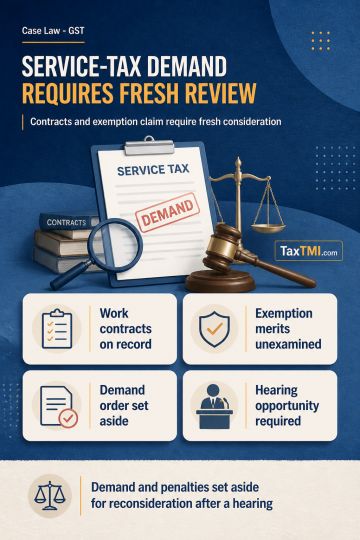
Governmental authority status supports construction-service exemption, while pre-cutoff contract and stamp-duty compliance requires verification on re...
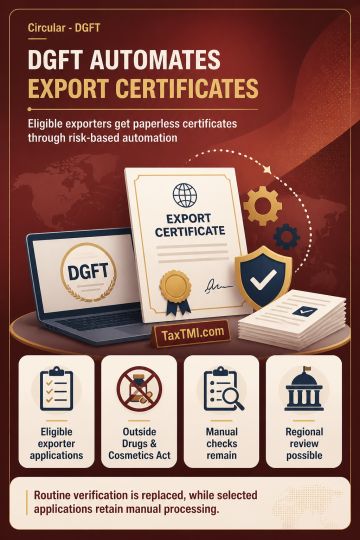
Automated Free Sale and Commerce Certificates enable paperless processing while retaining risk-based manual verification for selected exporter applica...
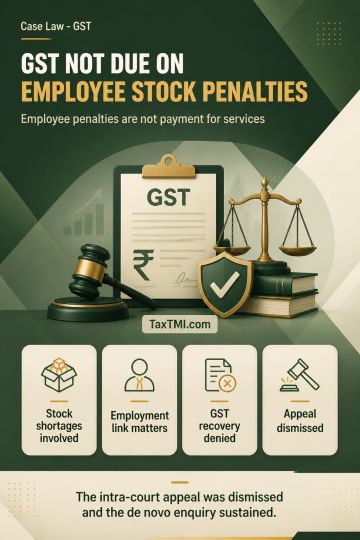
Employee stock-shortage penalties do not constitute consideration for services, preventing GST collection under Schedule II in employment relationship...
The Income Tax Bill, 2025's SCHEDULE-XIII updates and streamlines the earlier SCHEDULE 11 of the Income-tax Act, 1961, listing specific articles excluded from certain tax incentives to align fiscal policy with social and economic priorities. Both schedules exclude luxury, non-essential, and sin goods such as alcohol, tobacco, cosmetics, and certain consumer and capital goods from investment-linked tax benefits. SCHEDULE-XIII consolidates explanations into the main text for clarity and removes obsolete items, reflecting legislative refinement and modernization. The core policy remains unchanged, aiming to direct incentives toward priority sectors and prevent misuse of tax benefits. However, some inclusions, like toothpaste and gramophones, may require reconsideration. The schedule impacts businesses by limiting tax benefits for listed goods and poses interpretative challenges for tax authorities. Future reforms could enhance periodic updates and clearer policy rationales to address evolving market and technological developments.
The Income Tax Bill, 2025's SCHEDULE-XIII updates and streamlines the earlier SCHEDULE 11 of the Income-tax Act, 1961, listing specific articles excluded from certain tax incentives to align fiscal policy with social and economic priorities. Both schedules exclude luxury, non-essential, and sin goods such as alcohol, tobacco, cosmetics, and certain consumer and capital goods from investment-linked tax benefits. SCHEDULE-XIII consolidates explanations into the main text for clarity and removes obsolete items, reflecting legislative refinement and modernization. The core policy remains unchanged, aiming to direct incentives toward priority sectors and prevent misuse of tax benefits. However, some inclusions, like toothpaste and gramophones, may require reconsideration. The schedule impacts businesses by limiting tax benefits for listed goods and poses interpretative challenges for tax authorities. Future reforms could enhance periodic updates and clearer policy rationales to address evolving market and technological developments.
Note: It is a system-generated summary and is for quick reference only.
 TaxTMI
  TaxTMI
 of 4828






 Join Channel


