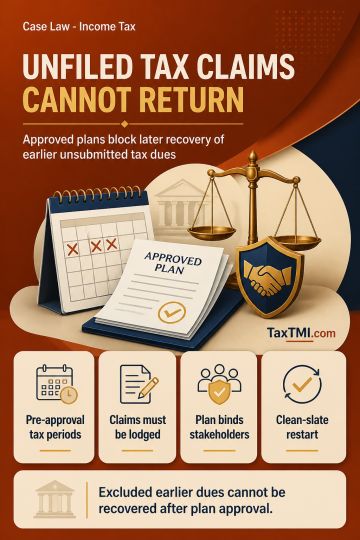
Approved resolution plans extinguish unsubmitted pre-approval tax claims, preventing later recovery outside the insolvency process and preserving a cl...
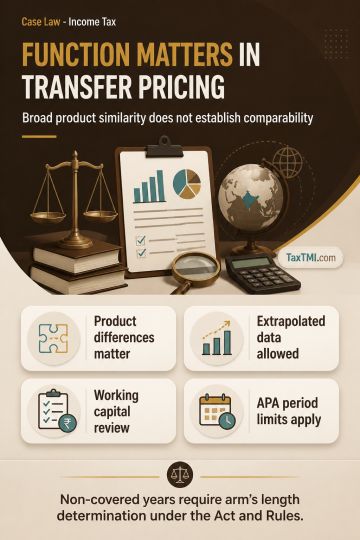
Transfer pricing comparability requires functional alignment and permits working capital adjustment, while APA margins cannot govern non-covered years...
Treaty benefit, goodwill depreciation and hedging costs: export commission disallowed, while key business deductions and depreciation claims succeeded...
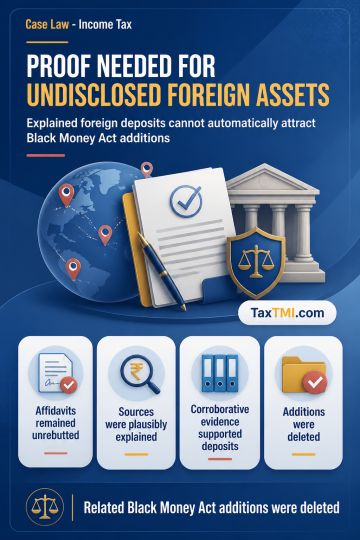
Undisclosed foreign asset classification requires an unexplained source; unrebutted affidavits and corroborative evidence defeated the Black Money Act...
The HC held that cancellation of GST registration under Section 29(2)(c) for non-filing of returns for six continuous months is valid. However, per the proviso to sub-rule (4) of Rule 22 of the CGST Rules, 2017, if the petitioner is willing to furnish all pending returns and pay the due tax along with interest and late fees, the empowered officer may drop the cancellation proceedings and restore the registration by passing an order in Form GST REG-20. The court disposed of the writ petition directing the petitioner to approach the competent authority within two months to seek restoration of GST registration by complying with the statutory requirements.
The HC held that cancellation of GST registration under Section 29(2)(c) for non-filing of returns for six continuous months is valid. However, per the proviso to sub-rule (4) of Rule 22 of the CGST Rules, 2017, if the petitioner is willing to furnish all pending returns and pay the due tax along with interest and late fees, the empowered officer may drop the cancellation proceedings and restore the registration by passing an order in Form GST REG-20. The court disposed of the writ petition directing the petitioner to approach the competent authority within two months to seek restoration of GST registration by complying with the statutory requirements.
Note: It is a system-generated summary and is for quick reference only.
 TaxTMI
 of 4803








 Join Channel


 TaxTMI