Transaction value cannot be rejected solely on non-statutory valuation guidelines without corroborative evidence supporting reassessment of final cust...
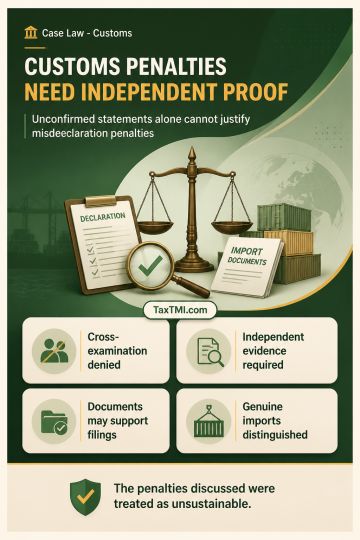
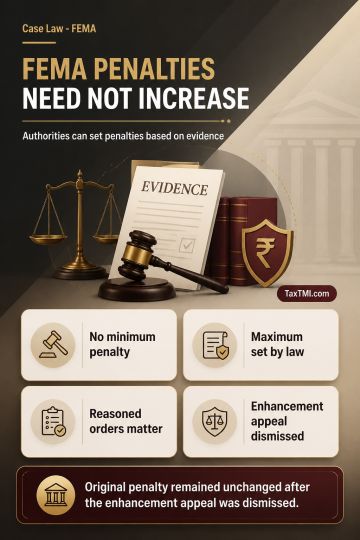
Cross-examination rights and corroborated evidence limit customs penalties for misdeclaration in genuine import transactions involving documented clea...
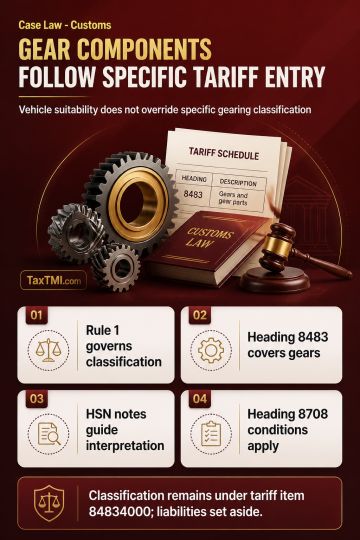
Tariff classification of vehicle gear components follows the specific gearing entry, displacing motor-vehicle parts classification and related liabili...
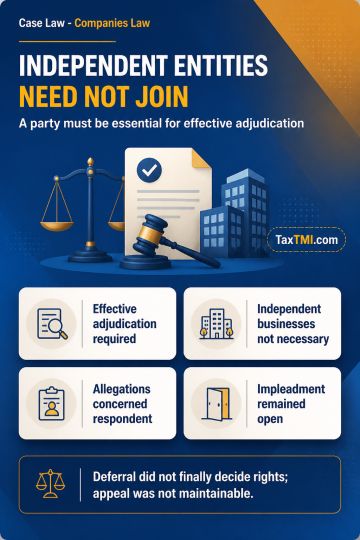
Necessary-party requirements limit impleadment of independent entities, while deferred consideration does not create an appealable adverse determinati...
Food supplement classification requires common parlance and authoritative tests, preventing treatment as proprietary Ayurvedic medicines without suppo...
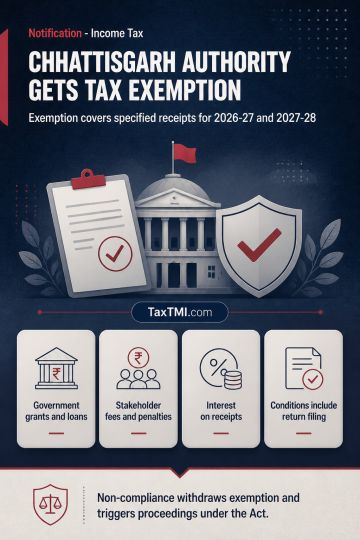
Specified regulatory authority income receives conditional tax exemption, subject to non-commercial activity, unchanged income character, and return f...
Page of 4800
Press 'Enter' after typing page number.
681 to 700 of 95999 Results
❮
❯
❯❯
0 / 200
Expand Note
Add to Folder
No Folders have been created
+
Are you sure you want to delete "My most important" ?
The HC held that the appellate authority is empowered under Rule 112(4) of the WBGST/CGST Rules, 2017, to admit additional evidence, including documents and witness examination, despite the restrictions in sub-rule (1). The appellate authority's failure to consider this jurisdiction rendered its order mechanical and unsatisfactory. Consequently, the matter was remanded with directions for the appellate authority to allow the petitioner to adduce additional evidence, specifically a certificate dated 10 August 2024 issued by respondent no.6. The writ petition was disposed of accordingly by way of remand.
The HC held that the appellate authority is empowered under Rule 112(4) of the WBGST/CGST Rules, 2017, to admit additional evidence, including documents and witness examination, despite the restrictions in sub-rule (1). The appellate authority's failure to consider this jurisdiction rendered its order mechanical and unsatisfactory. Consequently, the matter was remanded with directions for the appellate authority to allow the petitioner to adduce additional evidence, specifically a certificate dated 10 August 2024 issued by respondent no.6. The writ petition was disposed of accordingly by way of remand.
Note: It is a system-generated summary and is for quick reference only.
 TaxTMI
 of 4800
















 Join Channel


 TaxTMI
