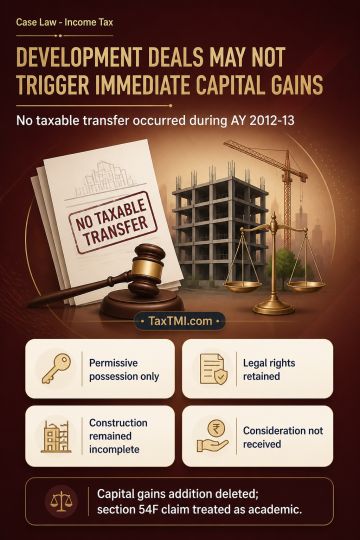
Development agreements require legal possession or effective enjoyment for capital gains transfer; permissive possession and deferred consideration de...
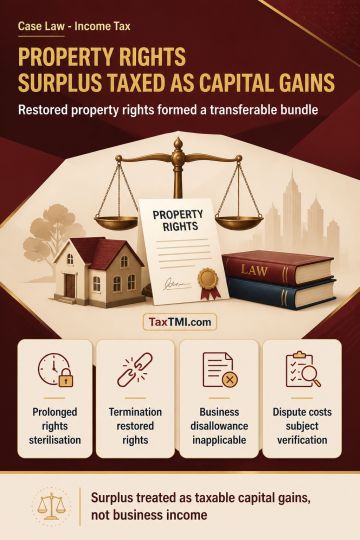
Prolonged sterilisation of development rights supports capital-gains treatment, while business-income disallowances cannot govern capital-gains comput...
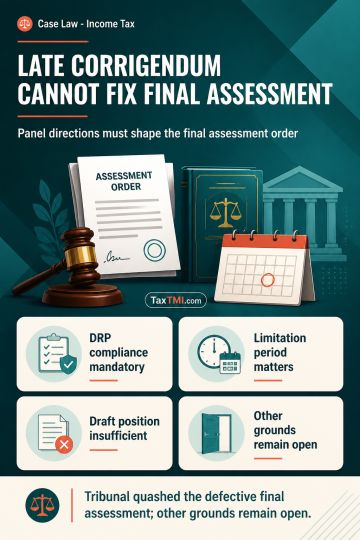
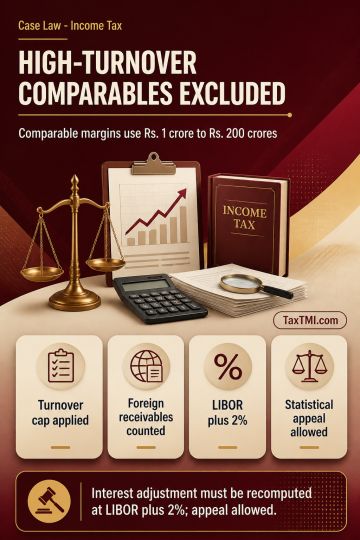
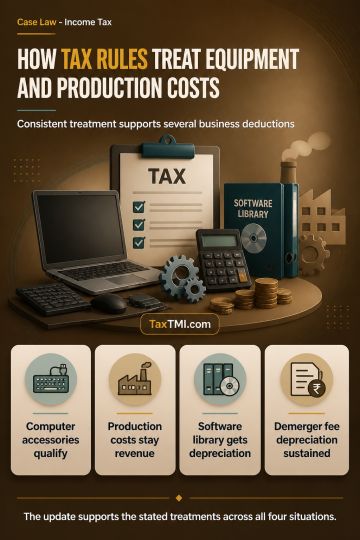
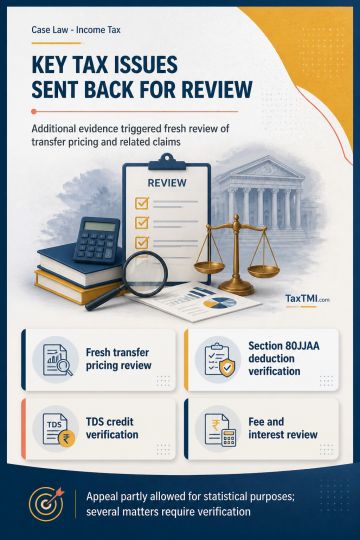
Additional evidence in transfer pricing dispute leads to fresh examination, while tax deductions, TDS credit, fee and refund interest require verifica...
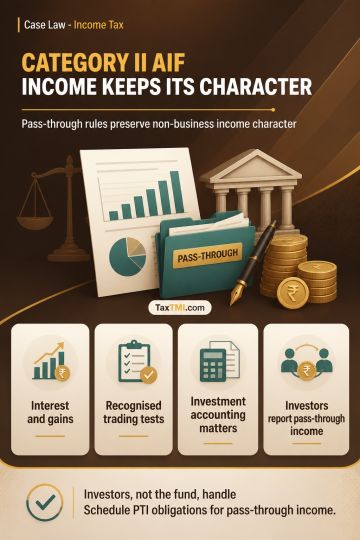
Category II AIF pass-through taxation preserves non-business income character; investment receipts cannot be reclassified without applying recognised ...
The HC dismissed the writ petition challenging the reversal of Input Tax Credit (ITC) on grounds of irregular availing from suppliers with cancelled registrations, noting the petitioner conflated provisions of Section 16 with Section 74 of the Act. Section 16 governs eligibility of ITC, while Section 74 addresses proceedings in cases of fraud or willful misstatement. The court emphasized the multi-tiered statutory adjudicatory framework, including appeals under Section 107 and before the Appellate Tribunal, which are competent to examine factual disputes. Given the factual nature of the controversy and the availability of efficacious statutory remedies, the HC declined to interfere via writ jurisdiction. The petition was dismissed without costs, permitting the petitioner to pursue relief through the prescribed appellate mechanisms.
The HC dismissed the writ petition challenging the reversal of Input Tax Credit (ITC) on grounds of irregular availing from suppliers with cancelled registrations, noting the petitioner conflated provisions of Section 16 with Section 74 of the Act. Section 16 governs eligibility of ITC, while Section 74 addresses proceedings in cases of fraud or willful misstatement. The court emphasized the multi-tiered statutory adjudicatory framework, including appeals under Section 107 and before the Appellate Tribunal, which are competent to examine factual disputes. Given the factual nature of the controversy and the availability of efficacious statutory remedies, the HC declined to interfere via writ jurisdiction. The petition was dismissed without costs, permitting the petitioner to pursue relief through the prescribed appellate mechanisms.
Note: It is a system-generated summary and is for quick reference only.
 TaxTMI
 of 4805




 Join Channel


 TaxTMI
