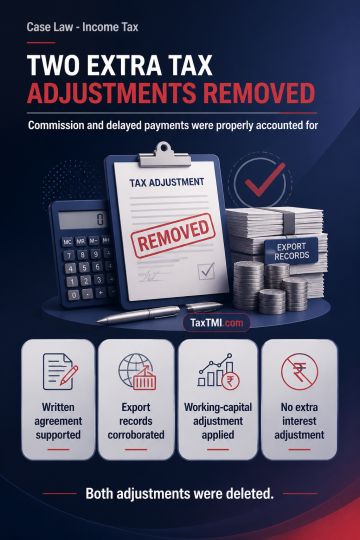
Pure reimbursement without income element escapes tax withholding, while delayed withholding and unsupported provisions face deferred or renewed scrut...
Public benefit requirement defeats charitable registration where residents' association services are reciprocal, member-only facilities governed by mu...
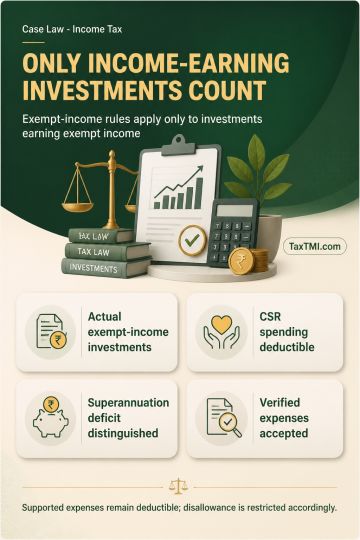
Exempt-income expenditure disallowance is confined to investments that actually generated exempt income, while supported business expenses remain dedu...
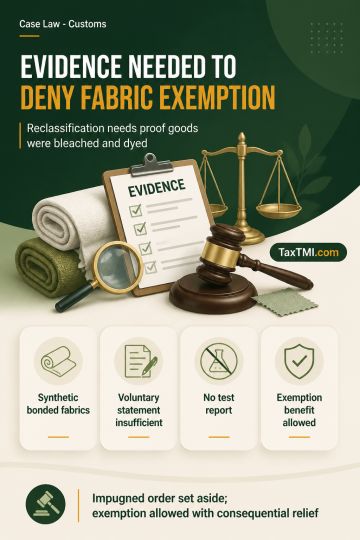
Objective characteristics and principal use govern mining-tyre classification, while fresh advance ruling applications may rely on additional technica...
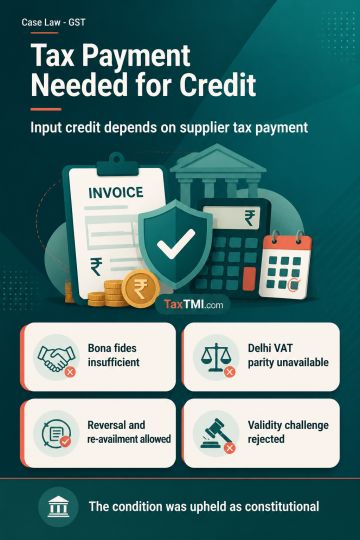
The HC dismissed the writ petition challenging the reversal of Input Tax Credit (ITC) on grounds of irregular availing from suppliers with cancelled registrations, noting the petitioner conflated provisions of Section 16 with Section 74 of the Act. Section 16 governs eligibility of ITC, while Section 74 addresses proceedings in cases of fraud or willful misstatement. The court emphasized the multi-tiered statutory adjudicatory framework, including appeals under Section 107 and before the Appellate Tribunal, which are competent to examine factual disputes. Given the factual nature of the controversy and the availability of efficacious statutory remedies, the HC declined to interfere via writ jurisdiction. The petition was dismissed without costs, permitting the petitioner to pursue relief through the prescribed appellate mechanisms.
The HC dismissed the writ petition challenging the reversal of Input Tax Credit (ITC) on grounds of irregular availing from suppliers with cancelled registrations, noting the petitioner conflated provisions of Section 16 with Section 74 of the Act. Section 16 governs eligibility of ITC, while Section 74 addresses proceedings in cases of fraud or willful misstatement. The court emphasized the multi-tiered statutory adjudicatory framework, including appeals under Section 107 and before the Appellate Tribunal, which are competent to examine factual disputes. Given the factual nature of the controversy and the availability of efficacious statutory remedies, the HC declined to interfere via writ jurisdiction. The petition was dismissed without costs, permitting the petitioner to pursue relief through the prescribed appellate mechanisms.
Note: It is a system-generated summary and is for quick reference only.
 TaxTMI
 of 4803











 Join Channel


 TaxTMI
