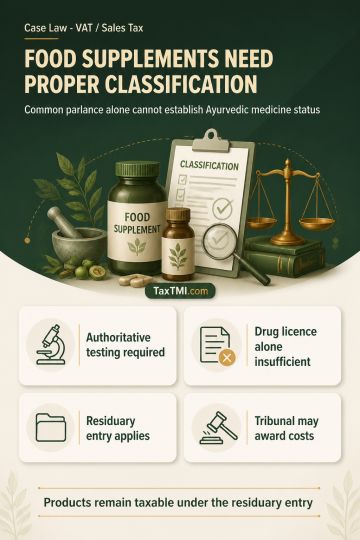
Food supplement classification requires common parlance and authoritative tests, preventing treatment as proprietary Ayurvedic medicines without suppo...
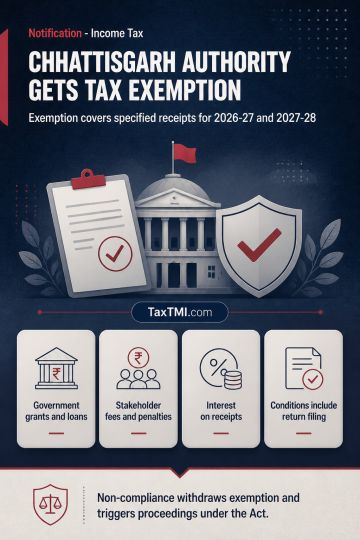
Specified regulatory authority income receives conditional tax exemption, subject to non-commercial activity, unchanged income character, and return f...
Tax exemption for regulatory authority income applies retrospectively, subject to non-commercial activity, unchanged income sources, and return-filing...
Input tax credit conditions remain constitutionally valid, with eligible recipient claims considered under GST circulars and retrospective filing dead...
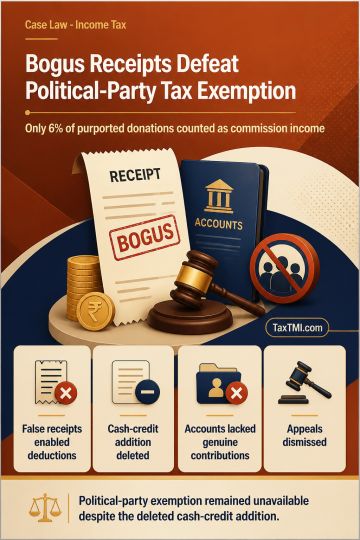
Bogus donation receipts justified commission income assessment and defeated political-party tax exemption for inaccurate accounts and reporting failur...
The ITAT held that the grant received by the assessee company from the UP Government, intended to pay outstanding cane growers' dues, is capital in nature and not a revenue receipt. The grant aimed to protect the intrinsic value of the share capital held by the State Government prior to disinvestment, and its utilization for revenue expenses does not convert it into taxable income. The Tribunal rejected the AO's view that the grant amounted to remission or cessation of liability under section 41(1), as no waiver occurred; the assessee acted merely as a conduit for the government's directed payment. Consequently, the impugned taxation of the grant as income under section 41(1) was quashed, and the appeals were allowed, affirming that the grant is not taxable in the hands of the assessee.
The ITAT held that the grant received by the assessee company from the UP Government, intended to pay outstanding cane growers' dues, is capital in nature and not a revenue receipt. The grant aimed to protect the intrinsic value of the share capital held by the State Government prior to disinvestment, and its utilization for revenue expenses does not convert it into taxable income. The Tribunal rejected the AO's view that the grant amounted to remission or cessation of liability under section 41(1), as no waiver occurred; the assessee acted merely as a conduit for the government's directed payment. Consequently, the impugned taxation of the grant as income under section 41(1) was quashed, and the appeals were allowed, affirming that the grant is not taxable in the hands of the assessee.
Note: It is a system-generated summary and is for quick reference only.
 TaxTMI
 of 4803















 Join Channel


 TaxTMI