Authentication of paper assessment orders upheld, while qualifying repairs, consumables and vendor advance write-offs remain deductible business claim...
Transaction value cannot be rejected solely on non-statutory valuation guidelines without corroborative evidence supporting reassessment of final cust...
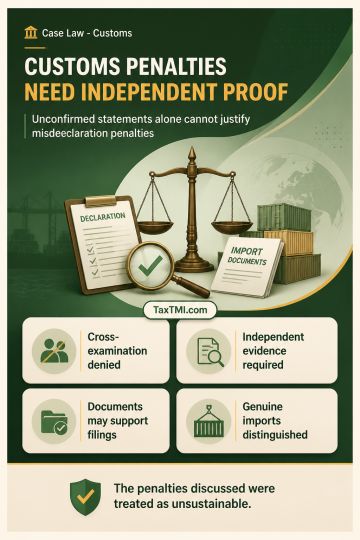
Cross-examination rights and corroborated evidence limit customs penalties for misdeclaration in genuine import transactions involving documented clea...
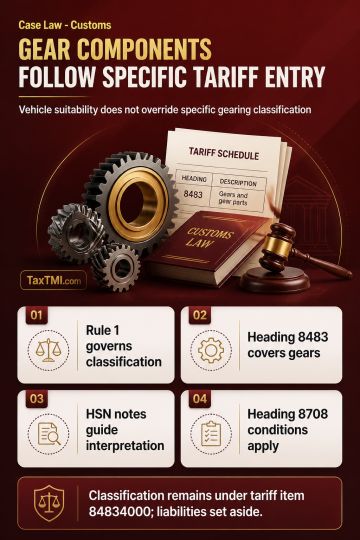
Tariff classification of vehicle gear components follows the specific gearing entry, displacing motor-vehicle parts classification and related liabili...
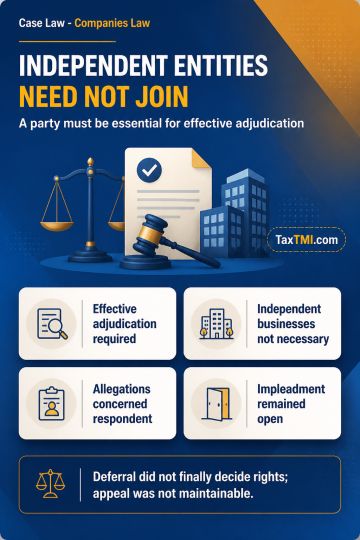
Necessary-party requirements limit impleadment of independent entities, while deferred consideration does not create an appealable adverse determinati...
The ITAT held that the grant received by the assessee company from the UP Government, intended to pay outstanding cane growers' dues, is capital in nature and not a revenue receipt. The grant aimed to protect the intrinsic value of the share capital held by the State Government prior to disinvestment, and its utilization for revenue expenses does not convert it into taxable income. The Tribunal rejected the AO's view that the grant amounted to remission or cessation of liability under section 41(1), as no waiver occurred; the assessee acted merely as a conduit for the government's directed payment. Consequently, the impugned taxation of the grant as income under section 41(1) was quashed, and the appeals were allowed, affirming that the grant is not taxable in the hands of the assessee.
The ITAT held that the grant received by the assessee company from the UP Government, intended to pay outstanding cane growers' dues, is capital in nature and not a revenue receipt. The grant aimed to protect the intrinsic value of the share capital held by the State Government prior to disinvestment, and its utilization for revenue expenses does not convert it into taxable income. The Tribunal rejected the AO's view that the grant amounted to remission or cessation of liability under section 41(1), as no waiver occurred; the assessee acted merely as a conduit for the government's directed payment. Consequently, the impugned taxation of the grant as income under section 41(1) was quashed, and the appeals were allowed, affirming that the grant is not taxable in the hands of the assessee.
Note: It is a system-generated summary and is for quick reference only.
 TaxTMI
 of 4803

















 Join Channel


 TaxTMI
