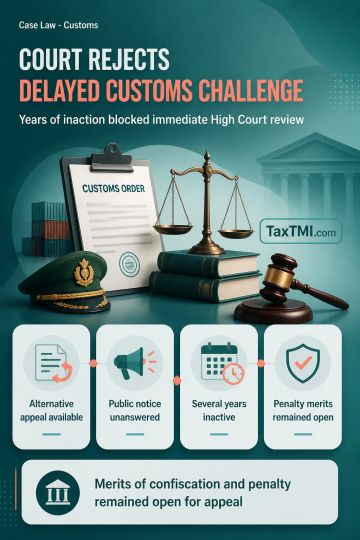
Alternative statutory remedy and unexplained delay barred writ review of customs confiscation adjudication, leaving merits for appellate consideration...
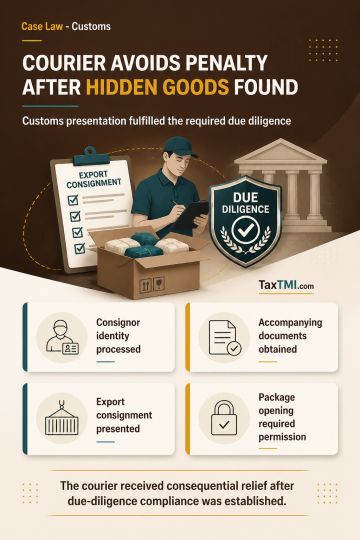
Authorised courier due diligence protects against penalties where declared exports conceal prohibited goods despite proper documentation and customs p...
Customs-controlled container movement now extends to DP World facilities, subject to segregation, inspections, reconciliation, and EXIM cargo priority...
The CESTAT set aside the order of confiscation of 18,880 kgs of Zinc Ash and the truck bearing Registration No. UP-78DN/3179, along with the associated redemption fines, under the Customs Act, 1962. The Tribunal found that the Revenue failed to provide corroborative evidence establishing that the goods were smuggled from Nepal, noting that the Zinc Ash was accompanied by valid GST invoices and e-way bills, which were not forged. The appellants provided credible purchase receipts and ledger entries demonstrating local procurement and sale. The goods were not notified under Section 123 of the Customs Act, placing the onus on the Revenue to prove smuggling, which was unmet. Consequently, no violation warranting penalties under Section 112(a)/(b) was established, leading to the setting aside of penalties imposed on the appellants. The appeal was accordingly allowed and disposed of.
The CESTAT set aside the order of confiscation of 18,880 kgs of Zinc Ash and the truck bearing Registration No. UP-78DN/3179, along with the associated redemption fines, under the Customs Act, 1962. The Tribunal found that the Revenue failed to provide corroborative evidence establishing that the goods were smuggled from Nepal, noting that the Zinc Ash was accompanied by valid GST invoices and e-way bills, which were not forged. The appellants provided credible purchase receipts and ledger entries demonstrating local procurement and sale. The goods were not notified under Section 123 of the Customs Act, placing the onus on the Revenue to prove smuggling, which was unmet. Consequently, no violation warranting penalties under Section 112(a)/(b) was established, leading to the setting aside of penalties imposed on the appellants. The appeal was accordingly allowed and disposed of.
Note: It is a system-generated summary and is for quick reference only.
 TaxTMI
  TaxTMI
 of 4827









 Join Channel


