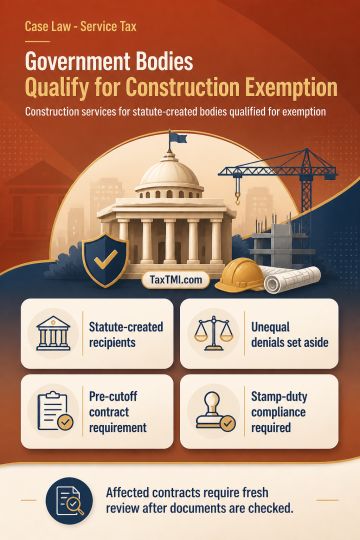
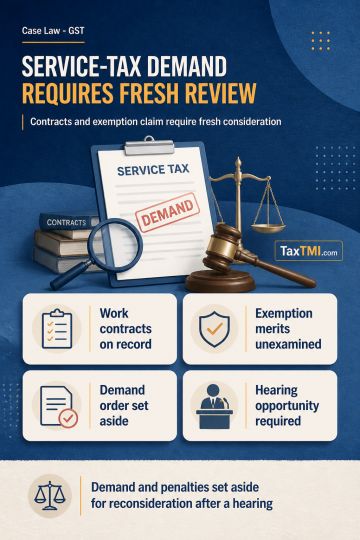
Governmental authority status supports construction-service exemption, while pre-cutoff contract and stamp-duty compliance requires verification on re...
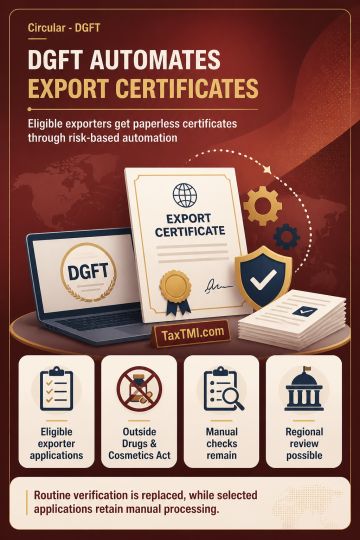
Automated Free Sale and Commerce Certificates enable paperless processing while retaining risk-based manual verification for selected exporter applica...
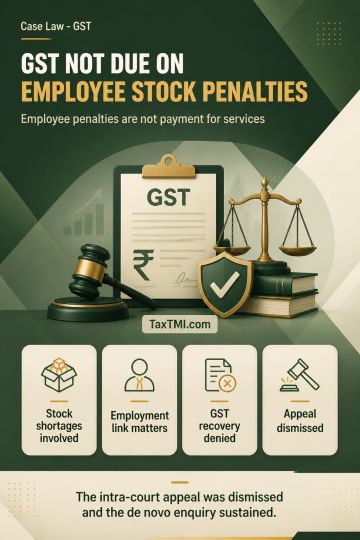
Employee stock-shortage penalties do not constitute consideration for services, preventing GST collection under Schedule II in employment relationship...
The CESTAT upheld the imposition of penalty under Rule 26 of the Central Excise Rules, 2002 against the appellant, a GPA holder, for involvement in evasion of Customs and Central Excise duty through diversion of finished goods into the Domestic Tariff Area without payment of duty. The Tribunal found the appellant and co-accused instrumental in executing a fraudulent scheme, including misuse of 100% EOU concessions and submission of forged export documents. The Memorandum of Understanding dated 22.11.2001 was held to be a valid legal document substantiating liability. Despite delays and repeated opportunities for personal hearing, the appellant failed to respond. The impugned Order-in-Original was deemed lawful, reasoned, and based on correct appreciation of evidence. Consequently, the appeal was dismissed, affirming the penalty and confirming the appellant's responsibility for the contraventions under the Central Excise Act, 1944 and associated rules.
The CESTAT upheld the imposition of penalty under Rule 26 of the Central Excise Rules, 2002 against the appellant, a GPA holder, for involvement in evasion of Customs and Central Excise duty through diversion of finished goods into the Domestic Tariff Area without payment of duty. The Tribunal found the appellant and co-accused instrumental in executing a fraudulent scheme, including misuse of 100% EOU concessions and submission of forged export documents. The Memorandum of Understanding dated 22.11.2001 was held to be a valid legal document substantiating liability. Despite delays and repeated opportunities for personal hearing, the appellant failed to respond. The impugned Order-in-Original was deemed lawful, reasoned, and based on correct appreciation of evidence. Consequently, the appeal was dismissed, affirming the penalty and confirming the appellant's responsibility for the contraventions under the Central Excise Act, 1944 and associated rules.
Note: It is a system-generated summary and is for quick reference only.
 TaxTMI
  TaxTMI
 of 4828








 Join Channel


