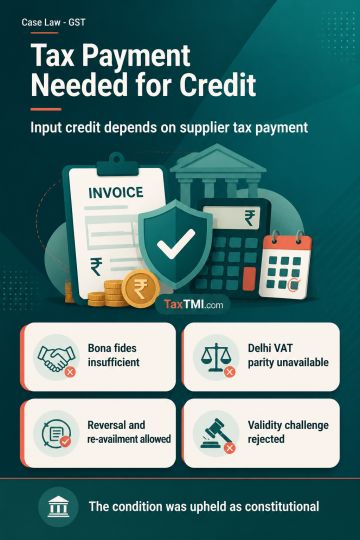
Input tax credit conditions remain constitutionally valid, with eligible recipient claims considered under GST circulars and retrospective filing dead...
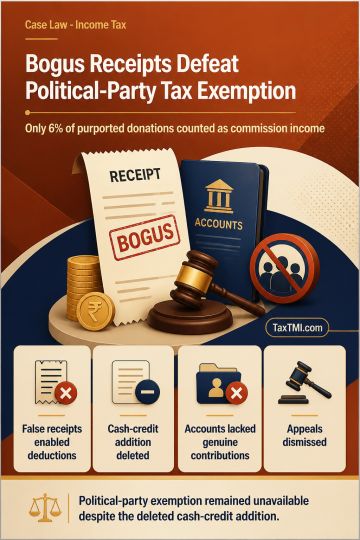
Bogus donation receipts justified commission income assessment and defeated political-party tax exemption for inaccurate accounts and reporting failur...
Pure reimbursement without income element escapes tax withholding, while delayed withholding and unsupported provisions face deferred or renewed scrut...
Public benefit requirement defeats charitable registration where residents' association services are reciprocal, member-only facilities governed by mu...
Exempt-income expenditure disallowance is confined to investments that actually generated exempt income, while supported business expenses remain dedu...
The ITAT upheld the deletion of penalty under section 271(1)(c) imposed on the assessee for disallowance of business loss claims related to advances treated as capital investments and interest expenditure disallowance. The Tribunal held that the assessee fully disclosed all relevant facts and there was no concealment or deliberate misstatement of income particulars. The dispute concerned a legal interpretation of transaction nature, not furnishing inaccurate particulars. Reliance was placed on precedents establishing that mere unsustainable claims do not attract penalty absent mala fide intent or concealment. The AO failed to demonstrate any intention to mislead or suppress material facts. As two views were possible on the allowability of the claims, the penalty was correctly deleted by the CIT(A). The appeal by the assessee was thus allowed.
The ITAT upheld the deletion of penalty under section 271(1)(c) imposed on the assessee for disallowance of business loss claims related to advances treated as capital investments and interest expenditure disallowance. The Tribunal held that the assessee fully disclosed all relevant facts and there was no concealment or deliberate misstatement of income particulars. The dispute concerned a legal interpretation of transaction nature, not furnishing inaccurate particulars. Reliance was placed on precedents establishing that mere unsustainable claims do not attract penalty absent mala fide intent or concealment. The AO failed to demonstrate any intention to mislead or suppress material facts. As two views were possible on the allowability of the claims, the penalty was correctly deleted by the CIT(A). The appeal by the assessee was thus allowed.
Note: It is a system-generated summary and is for quick reference only.
 TaxTMI
 of 4782



















 Join Channel


 TaxTMI