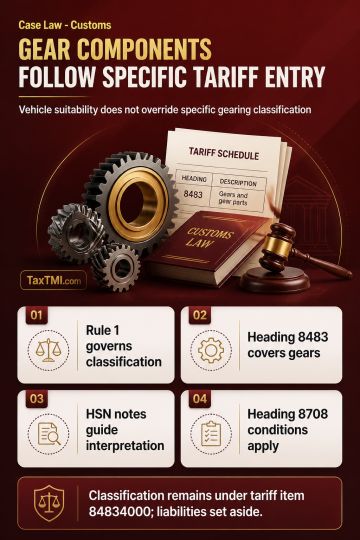
Tariff classification of vehicle gear components follows the specific gearing entry, displacing motor-vehicle parts classification and related liabili...
Necessary-party requirements limit impleadment of independent entities, while deferred consideration does not create an appealable adverse determinati...
Food supplement classification requires common parlance and authoritative tests, preventing treatment as proprietary Ayurvedic medicines without suppo...
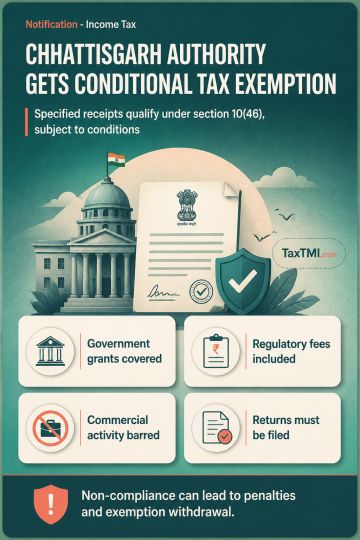
Specified regulatory authority income receives conditional tax exemption, subject to non-commercial activity, unchanged income character, and return f...
Tax exemption for regulatory authority income applies retrospectively, subject to non-commercial activity, unchanged income sources, and return-filing...
The ITAT upheld the deletion of penalty under section 271(1)(c) imposed on the assessee for disallowance of business loss claims related to advances treated as capital investments and interest expenditure disallowance. The Tribunal held that the assessee fully disclosed all relevant facts and there was no concealment or deliberate misstatement of income particulars. The dispute concerned a legal interpretation of transaction nature, not furnishing inaccurate particulars. Reliance was placed on precedents establishing that mere unsustainable claims do not attract penalty absent mala fide intent or concealment. The AO failed to demonstrate any intention to mislead or suppress material facts. As two views were possible on the allowability of the claims, the penalty was correctly deleted by the CIT(A). The appeal by the assessee was thus allowed.
The ITAT upheld the deletion of penalty under section 271(1)(c) imposed on the assessee for disallowance of business loss claims related to advances treated as capital investments and interest expenditure disallowance. The Tribunal held that the assessee fully disclosed all relevant facts and there was no concealment or deliberate misstatement of income particulars. The dispute concerned a legal interpretation of transaction nature, not furnishing inaccurate particulars. Reliance was placed on precedents establishing that mere unsustainable claims do not attract penalty absent mala fide intent or concealment. The AO failed to demonstrate any intention to mislead or suppress material facts. As two views were possible on the allowability of the claims, the penalty was correctly deleted by the CIT(A). The appeal by the assessee was thus allowed.
Note: It is a system-generated summary and is for quick reference only.
 TaxTMI
 of 4782



















 Join Channel


 TaxTMI
