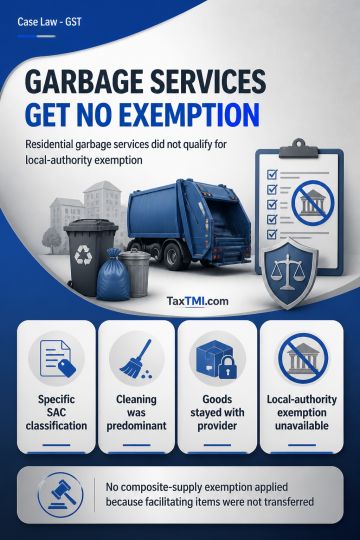
Residential waste collection classification under SAC 999423 defeats composite-supply exemption where facilitating goods are not transferred to the lo...
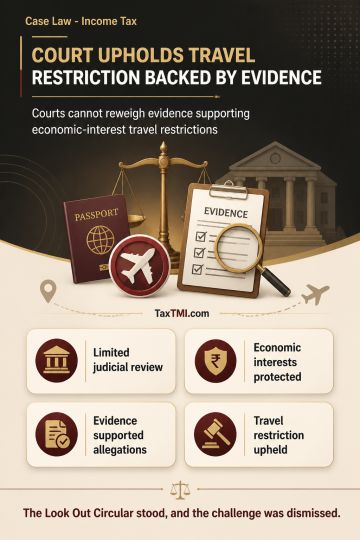
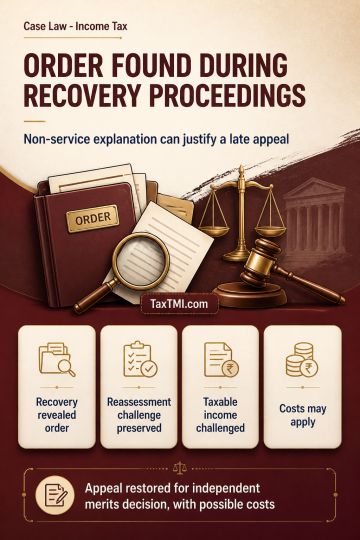
Condonation of delay permits statutory appeal restoration where inadequate service explanation prevented consideration of reassessment and taxable-inc...
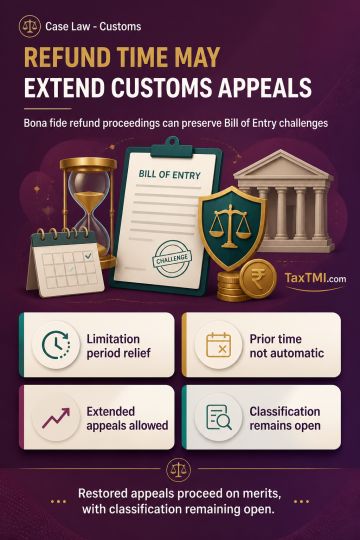
Limitation in customs appeals permits exclusion for bona fide refund proceedings, enabling restoration of Bill of Entry assessment challenges on merit...
Page of 4814
Press 'Enter' after typing page number.
441 to 460 of 96262 Results
❮
❯
❯❯
0 / 200
Expand Note
Add to Folder
No Folders have been created
+
Are you sure you want to delete "My most important" ?
The CESTAT held that the appellant's training programme, approved by the Ministry of Skill Development & Entrepreneurship and conducted as a partner of the National Skill Development Corporation, qualifies for exemption from service tax under Sl. No. 9A of Notification No. 25/2012-ST. The Tribunal found the programme falls within the scope of approved vocational education courses eligible for exemption under Section 66D(1)(iii) of the Finance Act, 1994, rendering further discussion on this ground unnecessary. Regarding limitation, the Department's prior knowledge and acknowledgement of the appellant's activities precluded invocation of the extended period for tax recovery, as no suppression of facts was established. Accordingly, the demand confirmed against the appellant was set aside on limitation grounds. The appeal was allowed, with no service tax liability confirmed against the appellant.
The CESTAT held that the appellant's training programme, approved by the Ministry of Skill Development & Entrepreneurship and conducted as a partner of the National Skill Development Corporation, qualifies for exemption from service tax under Sl. No. 9A of Notification No. 25/2012-ST. The Tribunal found the programme falls within the scope of approved vocational education courses eligible for exemption under Section 66D(1)(iii) of the Finance Act, 1994, rendering further discussion on this ground unnecessary. Regarding limitation, the Department's prior knowledge and acknowledgement of the appellant's activities precluded invocation of the extended period for tax recovery, as no suppression of facts was established. Accordingly, the demand confirmed against the appellant was set aside on limitation grounds. The appeal was allowed, with no service tax liability confirmed against the appellant.
Note: It is a system-generated summary and is for quick reference only.
 TaxTMI
  TaxTMI
 of 4814




 Join Channel