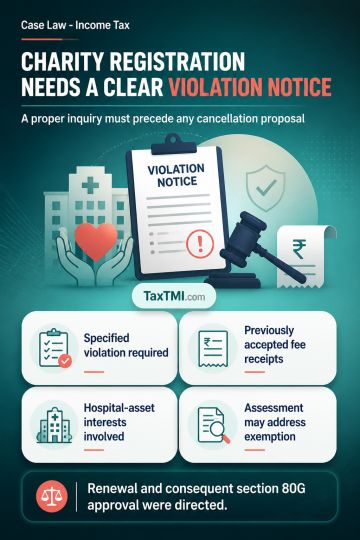
Charitable trust registration requires a specified-violation notice; settled cash deposits and related-party payments did not justify cancellation or ...
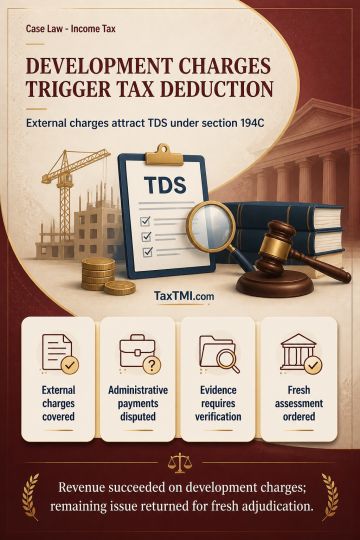
External development charges trigger TDS under section 194C, while disputed administrative payments require factual verification and fresh adjudicatio...
Section 270AA penalty immunity requires identified statutory defaults and a hearing before rejection; reassessment disclosure may constitute under-rep...
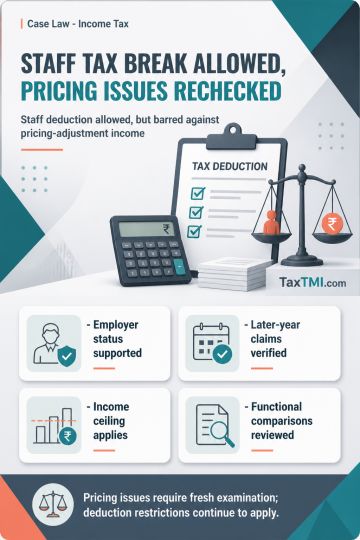
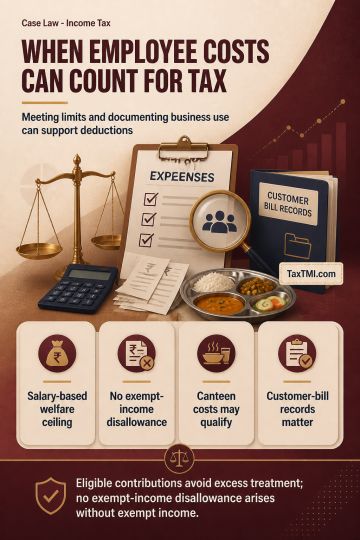
Section 80JJAA employee-cost deduction allowed for deployed staff but barred against transfer-pricing income enhancement, with pricing issues remanded...
Transfer-pricing methodology protects commercially genuine associated-enterprise payments, while pre-2016 secondary adjustments and related notional i...
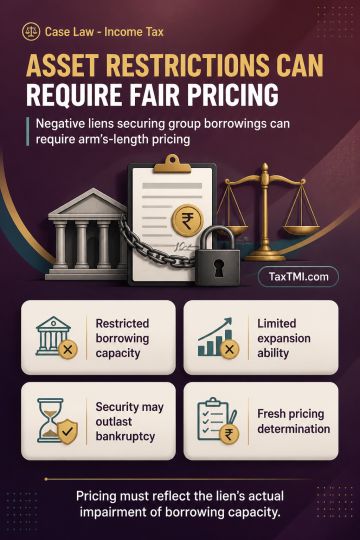
Negative liens over operating assets can constitute international transactions requiring arm's-length pricing reflecting restricted borrowing and expa...
Cross-examination rights in Customs Broker revocation inquiries require witness examination; procedural denial may be cured through fresh adjudication...
The DGFT issued a Trade Notice mandating the adoption of a standardized Internal Compliance Programme (ICP) by industries exporting dual-use (SCOMET) items to ensure adherence to export control laws under India's Foreign Trade Policy 2023. The ICP framework delineates comprehensive governance including management commitment, risk assessment, transaction screening, licensing, training, monitoring, and corrective actions aligned with international standards such as ISO 37301 and Wassenaar Arrangement guidelines. Organizations must implement documented policies, appoint designated export compliance officers, and maintain robust controls over physical and intangible transfers. Performance evaluation through audits and management reviews is required to ensure continual improvement. A case study of a mid-sized electronics manufacturer exemplifies successful ICP implementation resulting in GAICT scheme approval, reduced licensing delays, and enhanced compliance. The regulatory framework aims to prevent unauthorized export of sensitive dual-use items, promoting responsible trade and contributing to national and global security objectives.
The DGFT issued a Trade Notice mandating the adoption of a standardized Internal Compliance Programme (ICP) by industries exporting dual-use (SCOMET) items to ensure adherence to export control laws under India's Foreign Trade Policy 2023. The ICP framework delineates comprehensive governance including management commitment, risk assessment, transaction screening, licensing, training, monitoring, and corrective actions aligned with international standards such as ISO 37301 and Wassenaar Arrangement guidelines. Organizations must implement documented policies, appoint designated export compliance officers, and maintain robust controls over physical and intangible transfers. Performance evaluation through audits and management reviews is required to ensure continual improvement. A case study of a mid-sized electronics manufacturer exemplifies successful ICP implementation resulting in GAICT scheme approval, reduced licensing delays, and enhanced compliance. The regulatory framework aims to prevent unauthorized export of sensitive dual-use items, promoting responsible trade and contributing to national and global security objectives.
Note: It is a system-generated summary and is for quick reference only.
 TaxTMI
  TaxTMI
 of 4828

















 Join Channel


