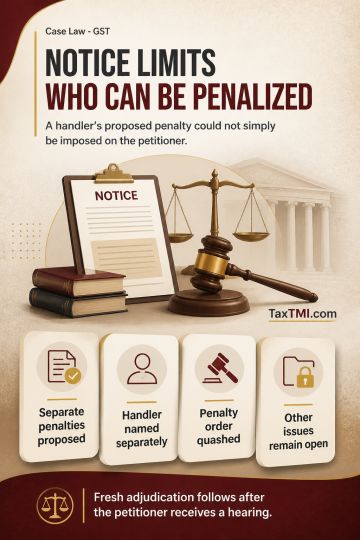
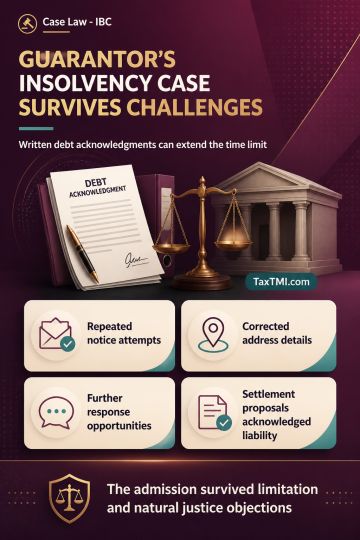
Service of notice and contractual debt acknowledgment preserved insolvency admission against a corporate guarantor despite limitation and natural just...
Original works exemption excludes standalone boulder transportation, leaving subcontracted railway-project transport services subject to service tax l...
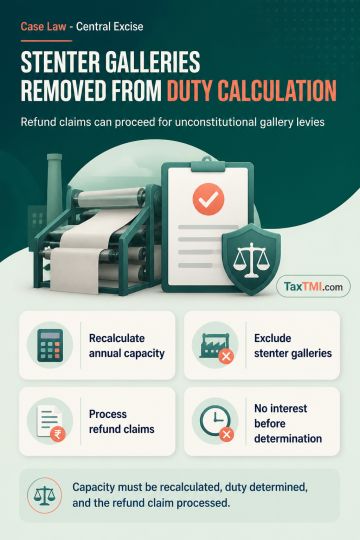
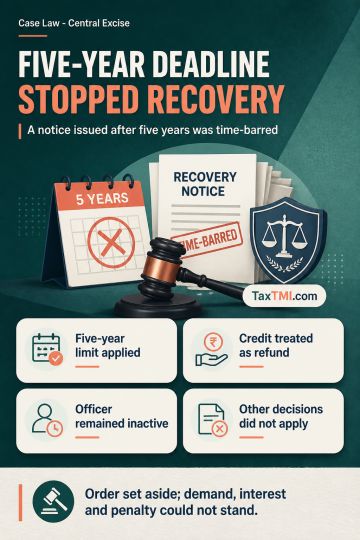
Annual production capacity determinations excluding stenter galleries support refunds for unconstitutional excise levies without an unjust-enrichment ...
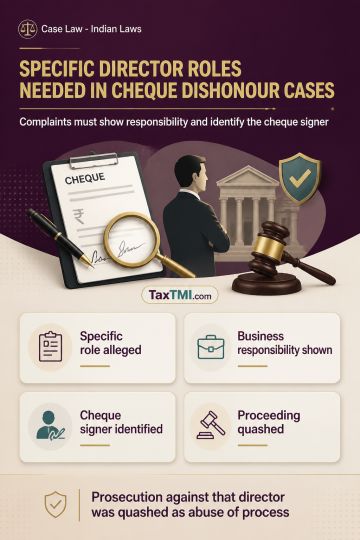
Vicarious liability for cheque dishonour requires specific allegations of responsibility and cheque signatory; generic director allegations cannot sus...
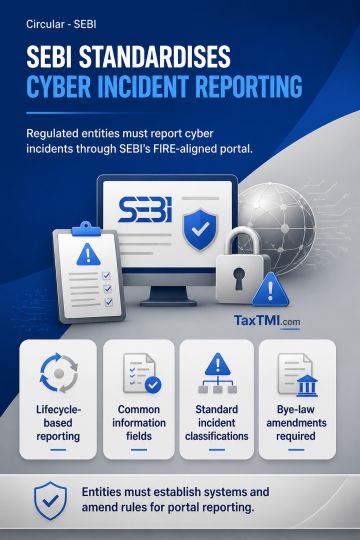
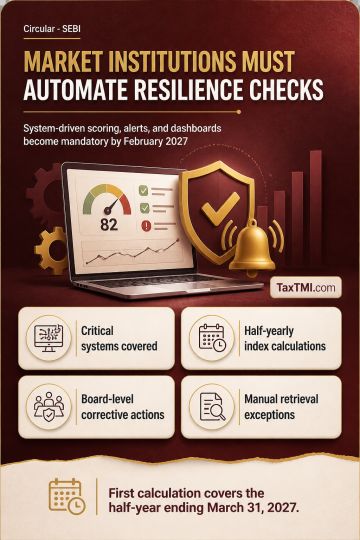
IT Resilience Index requires market infrastructure institutions to automate resilience scoring, early warnings, and continuous service-delivery monito...
The HC quashed the criminal complaint filed under Section 174 IPC for noncompliance with a summons issued under Section 108 Customs Act, holding that the Customs Act constitutes a special code governing investigations and penalties, thereby excluding general penal provisions like Sections 174/175 IPC. The Court found that Section 117 Customs Act prescribes the appropriate penalty for failure to comply with summons under the Act. The issuance of a non-bailable warrant for a single missed appearance was deemed an abuse of power by the Customs officer, especially since the petitioner had otherwise cooperated with investigations. Consequently, the complaint and all related proceedings were set aside, affirming that enforcement actions must adhere strictly to the procedural framework established under the Customs Act.
The HC quashed the criminal complaint filed under Section 174 IPC for noncompliance with a summons issued under Section 108 Customs Act, holding that the Customs Act constitutes a special code governing investigations and penalties, thereby excluding general penal provisions like Sections 174/175 IPC. The Court found that Section 117 Customs Act prescribes the appropriate penalty for failure to comply with summons under the Act. The issuance of a non-bailable warrant for a single missed appearance was deemed an abuse of power by the Customs officer, especially since the petitioner had otherwise cooperated with investigations. Consequently, the complaint and all related proceedings were set aside, affirming that enforcement actions must adhere strictly to the procedural framework established under the Customs Act.
Note: It is a system-generated summary and is for quick reference only.
 TaxTMI
  TaxTMI
 of 4828




 Join Channel